
Interview: CEO of CES 2017 on the Future of Connectivity
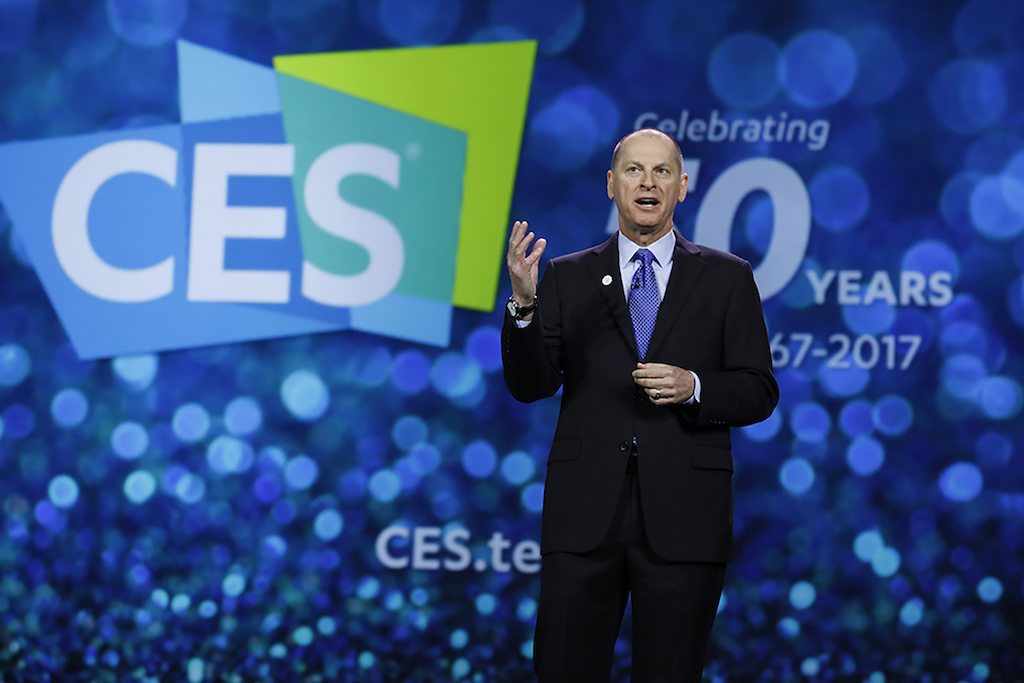
Photo Credit: Gary Shapiro, CEO of the Consumer Technology Association, gives his keynote at CES 2017. Consumer Technology Association
Skift Take
CES 2017 this month in Las Vegas marked the emergence of Artificial Intelligence-integrated connectivity and voice responsiveness into the mainstream, especially in terms of smart cars and smart homes. We will soon all be basically living and driving inside our mobile phones.
The year 2017 should go down in history as the breakout year for ubiquitous connectivity.
Over 175,000 people swarmed into Las Vegas earlier this month for the 50th annual CES 2017 technology show, where more than 4,000 companies promoted their most advanced products in 25 themed marketplaces ranging from Baby Tech to Drones.
The big message this year emphasized that everything is eventually going to be digitally connected, and the promise of the Internet of Things is now real, especially in automotive and residential design. The most high-profile marketplaces at CES 2017 were Self-Driving Technology and Smart Homes, occupying a disproportionate chunk of the 2.8 million square feet of exhibit space.
However, the driverless cars really stole the show, positioned equally as both autonomous vehicles and online hubs integrated with artificial intelligence platforms. IBM defined that as cognitive mobility; Panasonic called it smart mobility; and Nissan referred to it as int