Puerto Rico Emerges From Hurricane Maria With a Plan and New Hope for Tourism
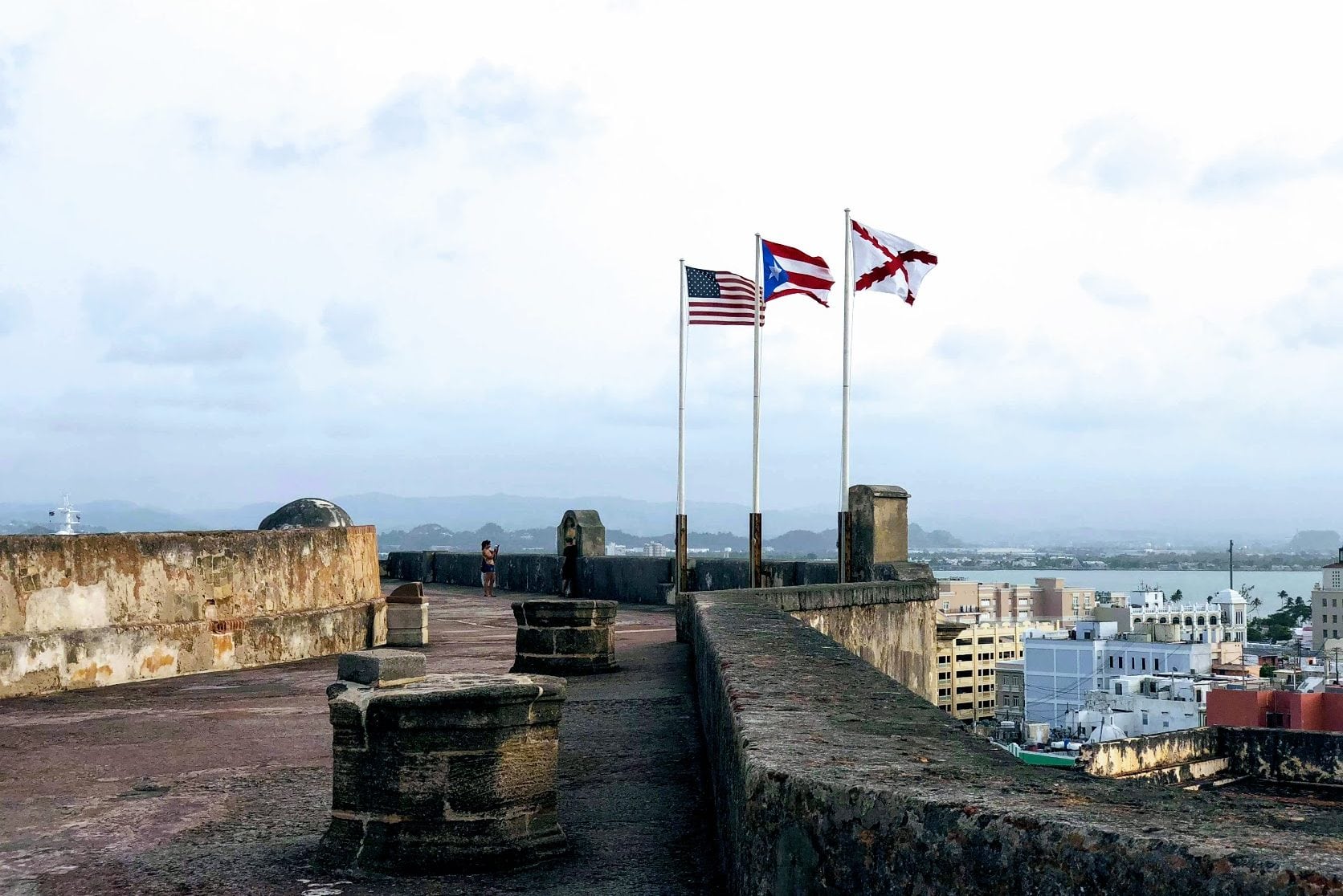
Photo Credit: View of the U.S., Puerto Rico, and Cross of Burgundy flag at the Castillo San Felipe del Morro in San Juan, Puerto Rico. Skift
Skift Take
For more than a century, Puerto Rico has been divided along two identities – Puerto Rican and American. But Hurricane Maria has forced it to reach a point where its tourism industry must merge the two, and market the destination in a way like many others on the mainland have done for decades if it hopes to become a global success story.
The Skift team stepped off a plane in San Juan, Puerto Rico, in late June for our annual retreat and, like travelers do every day, immediately switched our phones off from airplane mode. After a few seconds, many of us received a message that informed us we could use our phones as we normally would in the mainland United States but on an extended network.
It is a lingering impact of the island’s colonial history in the 21st century, but barely noticeable compared to actual hardships Puerto Rico’s tourism industry is facing.
Our phones were the first of many reminders we would receive of how Puerto Rico, located about 1,000 miles south of Miami and just east of the Dominican Republic, is part of the United States politically and economically. But in other ways, it’s a world away.
We arrived nine months and three days after Hurricane Maria made landfall on the island’s eastern shore. A category four hurricane with 155 mile-per-hour winds, Maria was one of the strongest A