
Japan’s Gleaming Rail Giant JR East Endures on White-Glove Service
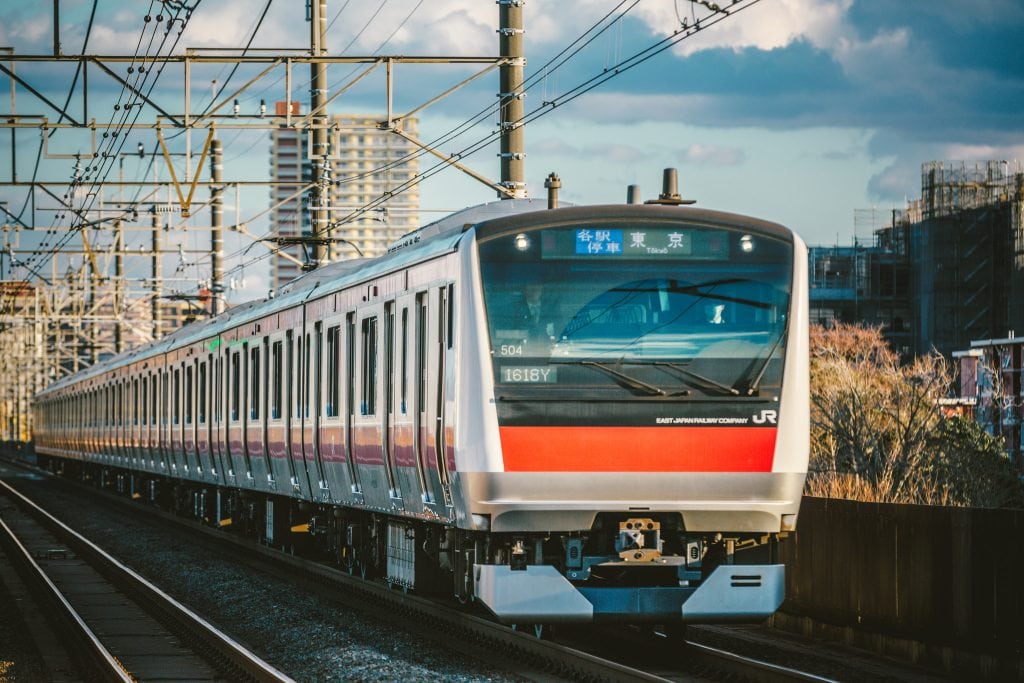
Photo Credit: One of JR East's snub-nosed trains who serve millions of passengers a day across Japan. Flickr
Skift Take
Average train delays of 36 seconds every year? Who could complain about that kind of service? The Japanese icon JR East is one of the subjects in Skift's recent sixth anniversary book, For the Long Haul, Lessons on Business Longevity, whose chapters we are excerpting for you here in the coming weeks.
The distinctive snub-nosed train decelerates and pulls into the station. Arranged along the platform, uniformed attendants bow to greet it. Passengers stream out, toting bags and briefcases and elaborately wrapped gifts as the attendants signal with a few pointed fingers that cleaning is about to begin. They wipe every surface, smooth a fresh paper cover onto every headrest, spin every seat to face the right direction, and remove every scrap of rubbish so that the train is sparkling again — all in a total of seven minutes. New passengers stream in, white-gloved conductors conduct their own theatrical call-and-response routine, a high-pitched bell and buzzer sound, the cleaning attendants bow again, and the train rolls off.
This mundane-yet-remarkable scene occurs at least 100 times a day at Tokyo Station alone, accompanying each new shinkansen (“bullet train”) departure. The absolute control is staggering. In a year, there is only an average delay of 36 seconds. In transportin