






Q&A: Hospitality Becomes an Always-On Relationship With Connected Journeys

Minor Hotels + Skift
SKIFT TAKE
The hotel stay now sits at the center of a wider ecosystem. As hospitality expands into wellness, residences, mobility, and retail, the strongest brands will create connected worlds that run on loyalty and emotional relevance, rather than relying solely on room revenue.
A fundamental reset is underway in the hospitality industry. After decades of focusing on occupancy, the industry is now building living ecosystems that keep guests connected long after check-out. Many of the world’s leading hotel brands are expanding into wellness, residences, and retail collaborations to stay relevant beyond the stay, with up to 40% of incremental hotel revenue growth coming from non-room categories. As brands diversify and continue to enhance their extended value propositions, loyalty programs are becoming the connective thread that allows guests to move seamlessly across branded experiences under one unified identity.
The reasons for this shift run deep. Economic volatility has slowed room revenue and pushed companies to find new sources of growth. At the same time, travelers expect brands to understand them as individuals, rather than just as bookings in a database. They value emotional connection and purpose as much as price or design. According to Skift Research, personalization drives stronger loyalty outcomes than traditional point systems, and wellness travel continues to rank among the most resilient and fastest-growing parts of the $7 trillion global wellness economy. These forces are creating a new competitive map for the industry, one that rewards breadth of experience and strength of relationship.
SkiftX spoke with Ian Di Tullio, chief commercial officer at Minor Hotels, to explore how global hospitality brands such as Anantara are building these multidimensional worlds.

SkiftX: Why are hotel groups expanding beyond the stay to build interconnected brand ecosystems? What forces are driving this change?
Ian Di Tullio: Hospitality has long revolved around Revenue Per Available Room (RevPAR) — the room, the rate, and the night. That formula worked when the hotel stay was the product. It isn’t anymore. Guests don’t switch their relationship with a brand on and off like a light every time they check in or out. They expect continuity, relevance, and a reason to stay connected. The traditional hotel model simply wasn’t built for that.
At the same time, economic reality has caught up with the industry. Room revenue alone is no longer enough to carry sustainable growth. The most resilient brands are finding their margin and momentum in adjacent verticals, such as food and beverage (F&B), wellness, branded residences, curated experiences, and even aviation and cruises, as well as in how metrics like Total Revenue per Available Room (TrevPAR) and Customer Lifetime Value continue to evolve. Expanding beyond the stay has evolved from a creative choice to a commercial necessity. This is the backdrop for what we call “connected journeys” — a guest relationship that spans formats, moments, and categories.
How is this shift changing the way guests experience a hotel brand?
The lobby is no longer the front door to the brand. Guests now enter a brand through a wellness program, a retail product, a piece of content, or a dining moment, long before they ever step onto a property. Increasingly, they also look to hotel brands to take them between destinations — by road, rail, river, air — extending the relationship beyond the walls of a hotel. The experience has become continuous rather than episodic.
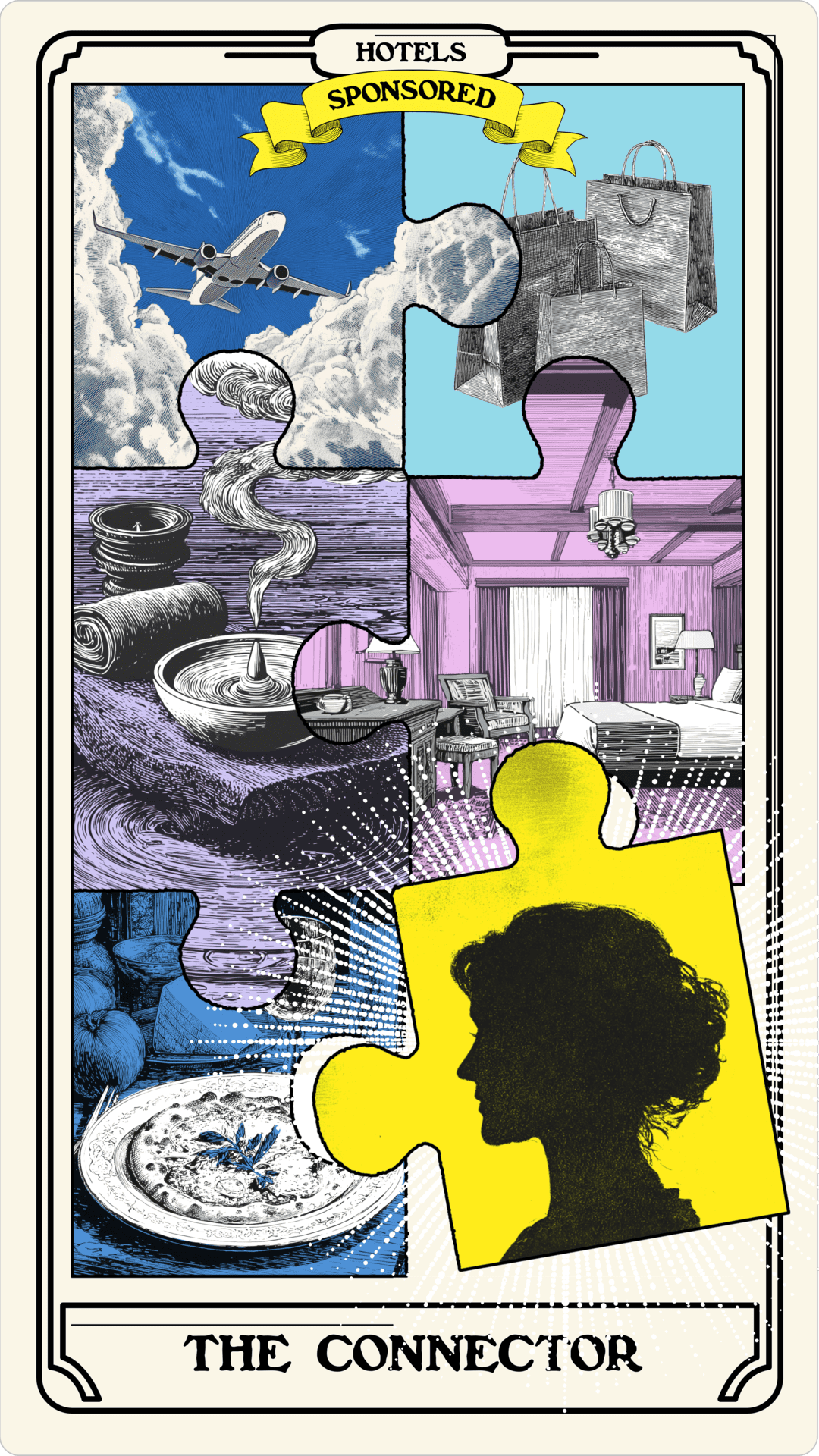
For Minor Hotels, that means designing ecosystems of belonging rather than isolated stays. If someone joins a retreat at one of our Anantara properties, picks up one of our home fragrances, or flies aboard an Anantara private jet, they’re still participating in the same brand universe. That’s the connected journey in action: the idea that the stay is just one chapter in a much longer, multi-touchpoint story.
What does it take to build a cohesive brand ecosystem across categories such as wellness, residences, retail, and others?
You need a center of gravity — meaning, a clear brand purpose that everything orbits around. Too many brands diversify by bolting on disconnected ventures and then wonder why their identity gets diluted. At Minor Hotels, everything starts with brand DNA. For example, Anantara is anchored in connection to place and culture. That ethos has to show up whether you’re in an Anantara spa, an Anantara train, or an Anantara-branded residence.
Our portfolio is expanding from The Wolseley Hotels to the Minor Reserve Collection, but governance remains tight. As the portfolio grows, guests will increasingly choose the brand and experience that resonates with their needs in the moment, allowing us to evolve the unique selling points of both the total ecosystem and each brand within it.
What role does loyalty play in connecting these different parts of the business and keeping guests engaged between stays?
Loyalty is the connective tissue, the infrastructure that turns a multi-brand portfolio into a single experience ecosystem. However, loyalty today has nothing to do with points. While a currency may persist as a baseline element of the program value proposition, the real value is in recognition and relevance. Through Minor DISCOVERY, we can understand motivations, predict intent, and track a guest across brands, categories, and moments. If a guest moves from a city stay to a villa holiday to a wellness retreat, these are not standalone bookings but rather chapters in a connected journey. Loyalty has become the driving force behind the branded experience ecosystem.
How is technology helping Minor Hotels understand guest behavior and translate that insight into more meaningful experiences?
Technology allows the ecosystem to operate as a single organism. We’re investing in connected data platforms that provide a unified view of the guest across all touchpoints, including hotels, residences, dining, experiences, and wellness. This enables us to move from being reactive to predictive, and in some cases, prescriptive.
AI helps us spot patterns humans simply can’t see, such as when a guest is primed for a secondary stay, which experiences they’re most likely to engage with next, and what cross-brand affinities they share with similar profiles. That level of personalization delivers commercial outcomes, genuine guest value, and, critically, a consistent experience across every touchpoint of the connected journey.
What opportunities do you see in wellness as a growth area, and how do you approach differentiation in a crowded space?
Wellness has evolved into a baseline expectation. The challenge now is differentiation. Everyone offers treatments and fitness, but very few offer a point of view. At Anantara, wellness must be both culturally rooted and results-driven. We increasingly combine local healing traditions with science-led programming to create experiences you simply can’t replicate elsewhere — not in a generic spa or gym, and certainly not with a trend-led, one-size-fits-all approach. That’s why we built Anantara Wellness as a brand rather than a spa concept. It enables us to create standalone wellness destinations, signature retreats, and products that reinforce the ecosystem.
How does Minor Hotels balance the pursuit of new income streams with the need to protect core hospitality standards?
Diversification only works if it strengthens the core. We don’t launch new verticals to chase trends, but to extend what we already do exceptionally well. That requires discipline. Every new venture must meet the same service, design, and brand standards as our flagship hotels. We have strict governance in place for brand architecture, unified guest data, shared leadership oversight, and a single narrative across all touchpoints. If growth compromises trust, it’s not sustainable growth.
Where do you see the idea of hospitality heading over the next decade, and how might the definition of a hotel evolve as brands expand into new areas?
Hospitality is shifting from a business built around places to one built around relationships. The hotel will remain the emotional heart of the industry, but it won’t be the whole story. Over the next decade, the most successful brands will be the ones that build ecosystems people actually want to live within, not just stay in. Hospitality will bleed into wellness, mobility, retail, and living. The hotel will become the anchor of a much larger universe.
None of this works without purpose. We’ve built our emerging Corporate Social Responsibility (CSR) strategy on the belief that real impact doesn’t come from grand gestures, but from the thousands of small actions that happen every day across our hotels. It’s these choices that build trust, strengthen communities, protect the places where we operate, and help keep the world worth exploring.
That’s exactly where Minor Hotels is headed — to a connected world of travel, wellness, living, and community. A vision grounded in the connected journey, elevated by design, and guided by a belief that every little thing contributes to long-term value for guests, communities, and the planet.
To learn more about Minor Hotels, visit minorhotels.com
This content was created collaboratively by Minor Hotels and Skift’s branded content studio, SkiftX.
To keep up with the trends year-round, sign up for The Daily
Skift’s morning newsletter delivers breaking news, features, and exclusive analysis from around the world straight to your inbox, five days a week.