
New Vertical Cabin Design Stacks Passengers to Increase Room in Economy
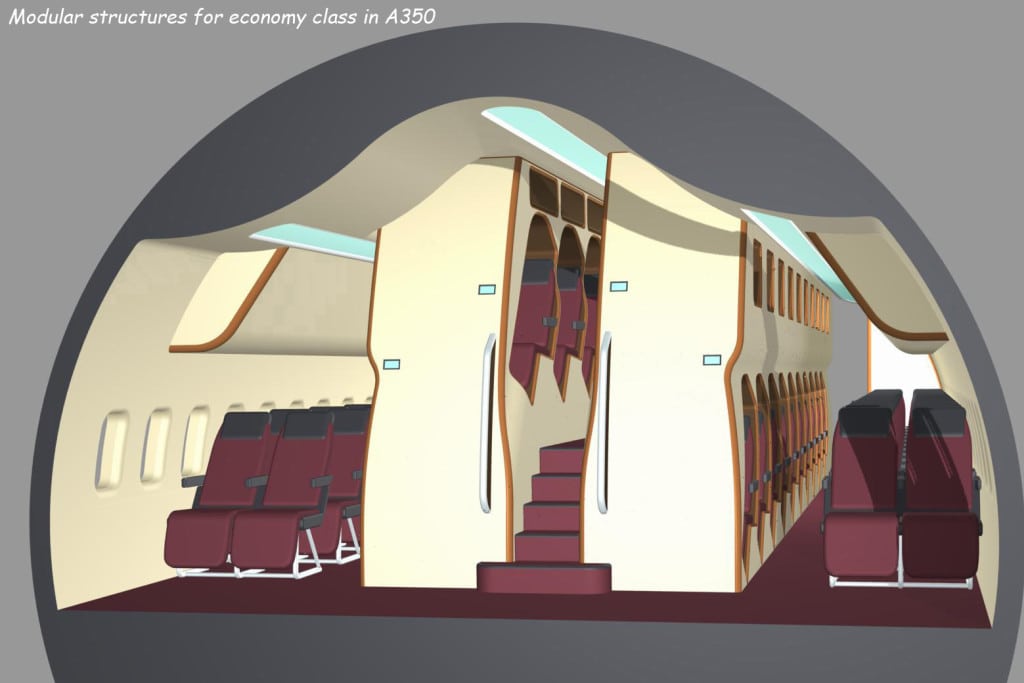
Photo Credit: Vertical seat lay-out proposal on alternative aircraft. Olivier Grégoire
Skift Take
Vertical seat design (3D) offers a way to make more passengers happy than horizontal lay-out alone can accomplish. It’s unfamiliar. It’s odd-looking. That makes it a little bit scary, to some. But, after 100 years of flight, perhaps it’s time for a radical change in direction.
[gallery ids="162446,162447,162448,162449,162450,162451,162452,162453,162454,162455"]
A patent filed by Airbus this year, which considered using vertical space in the cabin to make more room for passengers, was not universally well received. Despite this, independent inventor, Olivier Grégoire, stands by his own, somewhat similar, vertical seating proposal.
Grégoire’s points to some key advantages of his proposal which would benefit passengers.
Increased pitch (to 42 inches)
A better seat recline angle (35° instead of 15°).
Ease of access and evacuation, resulting from three aisles.
Improved relative privacy for passengers, with individual room for storage of carry-on items.
Though he is a designer, Grégoire is not an industry-insider. He works in the bedding industry and came up with this concept on his own, as a viable solution to today’s limited horizontal cabin space.
His argument, however, is similar to that of many industry designers proposing 3-D