
Nearly Half of UNESCO Sites Don’t Have Plans to Manage Overtourism Challenges
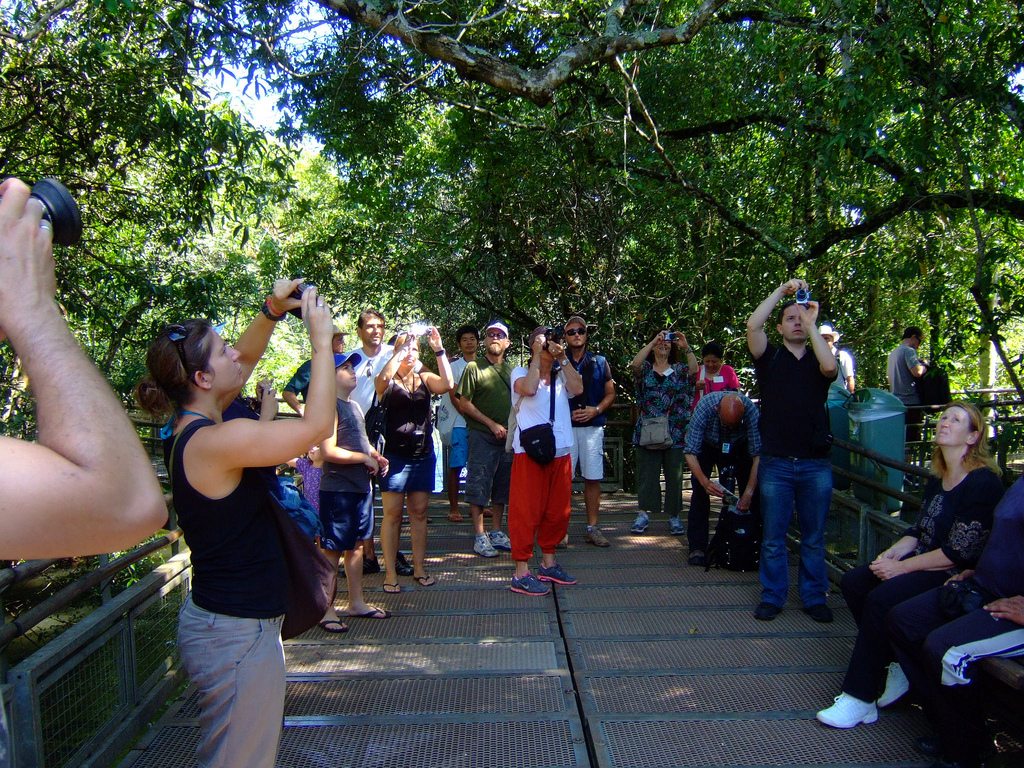
Photo Credit: Many UNESCO sites lack an extensive tourism management plan. Pictured are tourists taking photos at Iguazu National Park in Argentina, a UNESCO natural World Heritage Site. Flickr / John Seb Barber
Skift Take
UNESCO sites -- of all places -- should be the destinations taking leadership roles in tourism management planning as they're often the first place many tourists think about when deciding what to do on a trip. But data show that's far from reality for a variety of political and economic reasons.
Exploring natural UNESCO World Heritage Sites such as Australia's Great Barrier Reef or Yellowstone National Park in the United States is a top reason why many travelers choose to visit destinations, as unique sites like these collectively receive tens of millions of visitors each year.
A recent study, however, found that many of these sites don't have a tourism management plan in place and aren't doing enough to prevent negative impacts from mass tourism.
Some 105 sites (46 percent) of the 229 natural UNESCO sites, many of which are national parks or wildlife reserves, for example, have no active tourism management plan, according to researchers at Griffith University in Queensland, Australia who were commissioned by UNESCO to analyze the level of tourism planning across the world's natural UNESCO sites.
Tourism management plans outline sustainable tourism development goals such as monitoring the number of visitor arrivals and identifying specific areas zoned for tourists th