
This Is Why Long-Haul Coach Class Has Hardly Changed in Five Decades
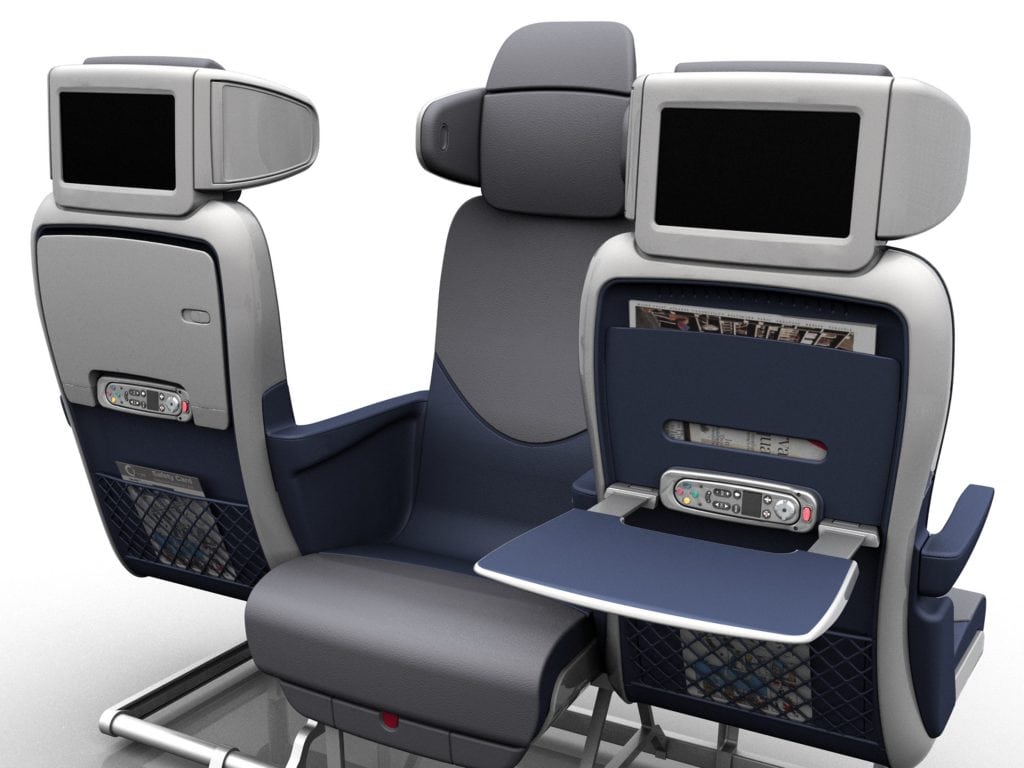
Photo Credit: Several years ago London design firm Acumen developed a new forward-backward coach seating configuration that it claims will give each passenger more room. But it is unlikely this configuration will ever appear on an airline. Acumen
Skift Take
Feel free to read as many articles as you want about new coach concept seats. But let's be honest: The coach configuration on most planes hasn't changed in decades, and it's probably not going to change any time soon.
Across London, workers at at least three design studios — the same people creating opulent premium class suites for wealthy travelers — spend a surprising amount of time thinking and doodling about how to make long-haul coach class more comfortable.
And yet, for the past five decades, almost nothing has changed. Long-haul economy class remains roughly as it was in the late 1960s, when Boeing introduced the 747, the world's first widebody aircraft. Today, as then, on planes that cross oceans you'll typically find two or three seats near the windows on each side, and three to four in a center section. About the only major difference is that the seats are a bit narrower, as airlines realized they could add more seats by shrinking each chair slightly.
"Where is the revolution?" asked Anthony Harcup, a designer at Acumen, the London firm that helped United Airlines create its new Polaris business class cabin. "The front end of the aircraft is unrecognizable from where we were 20 y