From Laguna Beach to Luxury Hotels: The Reality TV Star Who Built a Serious Career in Hospitality

Subscribe Apple Podcasts | Spotify | YouTube | RSS
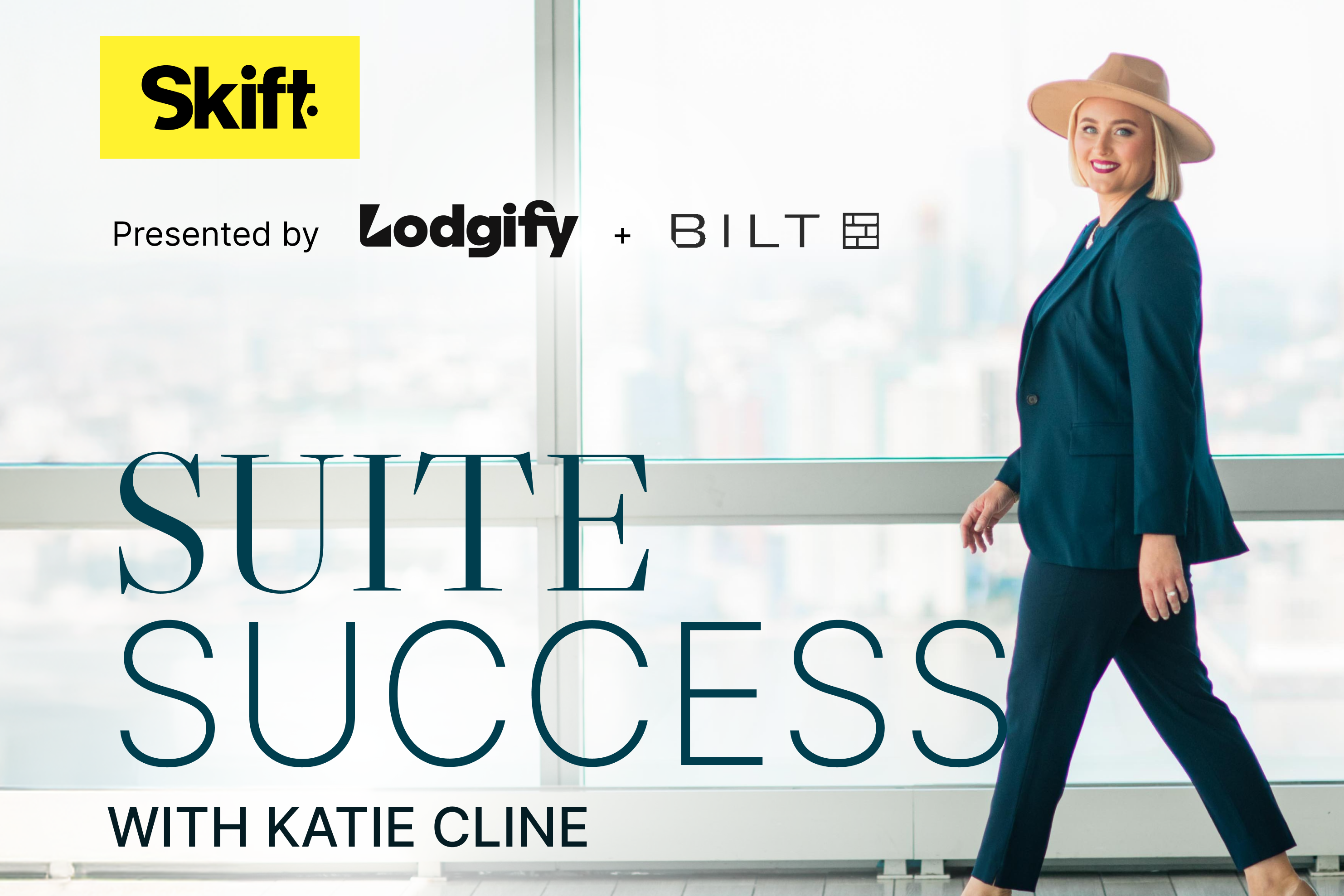
On this episode of Suite Success, host Katie Cline interviews Dieter Schmitz, an original cast member of Laguna Beach who has since built a distinguished career in hospitality.
From starting as a beach attendant to becoming a General Manager at just 25 years old, Schmitz has opened and repositioned nine hotels throughout his career across brands including Accor, IHG, Marriott and more.
Now, as General Manager of the Sofitel New York, he led a full-scale renovation of the flagship property while maintaining operations—an undertaking that required both operational precision and cultural transformation.
In this conversation, Schmitz reflects on the experience of early visibility, the professional implications of reality television, and the deliberate choice to pursue a long-term career in hospitality. He also shares a detailed look at building culture and assembling teams, while underscoring the central role people play in driving performance and guest satisfaction.
This episode is brought to you by Lodgify and Bilt!
Connect with Dieter:
Kolin’s LinkedIn: https://www.linkedin.com/in/dieterbschmitz
Sofitel New York’s Website: https://www.sofitel-new-york.com/
Watch This Episode
Transcript of This Conversation
This transcript is generated by artificial intelligence.
It’s one of those tools that just makes hosting feel more manageable. Until April 30th, Suite Success listeners can now get 60 percent off their yearly and bi-yearly plans with code SWEET60. That’s Suite like Hotel Suite.
Click the link in the show notes to get started.
Hi, I’m Dieter Schmitz and you’re listening to Suite Success.
You’ve just checked in to Suite Success. Join me, Katie Cline, for exclusive conversations with hotel executives, hospitality leaders, and industry innovators.
Together, we’ll uncover the strategies and techniques these masters of hospitality relentlessly refine. Whether you’re already in the industry, or just starting out, tune in every week to unlock the secret to your Suite Success.
Hello, everyone, and welcome back to another episode of Suite Success. I’m your host, Katie Cline, and today I’m thrilled to welcome Dieter Schmitz to the show.
1:39
From Beach Attendant to GM
You may recognize Dieter from the early days of reality television, as he was an original cast member of the MTV hit Laguna Beach. Since then, Dieter has gone on to build an extremely impressive career in hospitality.
He’s opened and repositioned nine high-profile hotels, five new builds, and four renovations with Accor, IHG, and Marriott, as well as an independent operator.
He’s now the general manager of the Sofitel New York, where he’s recently completed a full-scale renovation of the iconic flagship property. Dieter, thank you so much for joining us today.
Thank you for having me. Appreciate it.
Well, when I reached out to you, I had told you, like most millennials, I, of course, was watching the Laguna Beach Reunion, and that’s when I had learned that you had built this serious career in hospitality.
At what point did that shift happen for you?
2:32
Laguna Beach Fame
It was actually before we even did the show.
My uncle was in hotels. I followed him around growing up. He did Caesar’s Palace in Las Vegas.
He actually opened the montage in Laguna Beach. I grew up in hospitality and just loved all the moving parts at a young age. I started at 15 at Surf and Sand in Laguna as a pool beach attendant, which probably was the coolest job you could ever have.
Getting paid to hammer umbrellas at your childhood beach was like, I can’t believe I’m getting paid for this. Then I just stayed in the business. Literally, I stayed when the show was filming, after the show filmed.
I just always knew this was a career I loved and worked my way up, did every role possible. Then I became a GM at 25 and then just started opening hotels, which became my career. I’ve always loved hospitality since I can really remember.
Wow, that’s amazing.
I know on the reunion, you guys talked a lot about how you were all surprised by how well the show did, because we didn’t really have reality TV show at that time.
You guys referenced a few times that we didn’t have social media or that hunger for getting followers or things that maybe nowadays people look for when they go on to a show like that.
Since you had already been working in hospitality, you then have this crazy moment happen with the success of the show. Did that shift your focus away from hospitality at all?
Were you for a minute thinking, maybe I’m going to go down this more of a Hollywood path, or were you always like, I’m going to come back to hospitality no matter what?
I think I always knew, even at that age, we knew like, this is going to come and go, and I always just wanted to stay in the hotels. And I think there’s a period of time where that made that really hard.
I think at the show, at its peak, it really became this cultural phenomenon which none of us were ready for or knew.
And so when you’re trying to work the front desk at Surf and Sand and Laguna, when Laguna is a huge hit and there was an episode filmed at that hotel, it’s just like you’re checking people in and then asking for a picture. And it’s like, OK.
So there was a point where it’s like, maybe I’m trying to force the normalcy too much because it’s just not happening right now.
But I think that was a time where, and we talked about it a little bit, but these are your lifelong friends and you kind of reverted towards each other to get through that time.
But it also kept you really grounded where you’re like, look, we’re not famous, we’re infamous for reality show and that’ll come and go. And I think it brought us all that much together.
But from a career perspective, I think I was a little stubborn where I was, I’m still going to work the normal career path because I knew that eventually the show would fizzle out.
You know, what I didn’t know was that the fans were just so invested in it. You know, you can’t do a reunion show like we just did if that wasn’t there.
And to do this 20 years later, I think that was really eye opening for me to just see the interest in it, to see how much people have really enjoyed seeing this chapter close.
That’s been really special because you try to be modest about this experience, but I think when you’re in it, you may not really realize how rare that was. It was so far ahead of all these other shows, right? So it was kind of a pioneer in itself.
And to be a part of that was really cool.
I’m so impressed to hear that at the age that you guys were 18, 19 years old, you even had a sense then that this isn’t going to last forever.
5:57
Stigma and Persona
Because I feel like at that age, we don’t really have life perspective yet. And like you said, there was no benchmark for what you guys were doing.
So I would have almost thought you’d think like, this is going to be the way it is forever, for better or worse, if you’re somebody who likes that, or if you’re someone who dislikes that.
And I’m really interested in what you’re talking about, about being recognized, because that was something I was wondering, looking at your incredible resume, how difficult that must have been.
In a way, I think in today’s world, we’re in a space where personal brand means more than anything. And actually, if you have more followers and you have more clout, could actually really help you in your career.
But like you just said with that example of being at the front desk, I imagine your GM at the time was a bit like, you are so behind and causing a line of people to be slower on check-in because everyone wants a picture with you.
Yeah, you know, it was a conscientious decision I had always to never talk about the show or the experience. And even when this reunion came, I realized I had never on LinkedIn even addressed it ever.
And then I was like, I kind of have no choice now with this. And it was the first time ever where I was publicly like, okay, you know, this is happening.
But you know, I almost felt it from a career perspective, you get cornered hard into that persona.
And I dealt with it like the higher I got in my career, where people were like, oh, he was just on reality show and that was like a preconceived judgment. And so you’re working harder against that. You’re definitely not bringing it up.
And if it was brought up, then you addressed it. But I think I always felt and I could have been just paranoid that I had to work that much harder to earn the respect and trust for who I am versus a show.
And the show, I have no complaints about any of it or how we looked. But I think it’s just the reality. TV stigma can be one where people will quickly pigeonhole you or judge you that don’t know you.
And then that was something we dealt with. Even when I met my wife, right? It’s like you’re having to make sure that she can understand yourself versus any other opinions that people who have never met you may have, right?
So it was always interesting, you know? It’s like, who did you play on the show? And it’s like, it’s my name.
I played myself. And you just kind of you address it. And it’s like, yeah, it was really fun 20 years ago.
Now with this, my biggest concern was, you know, you open that door up a little bit again. And for me, it was it was something that I think everyone was, should I do this or not?
And the only reason why I did it personally was just because Lauren Conrad and Kristen Cavalier and Stephen Clutty, who, you know, obviously lifelong friends are producers on it.
And you felt, okay, this is going to be a lot different than what they’ve, you know, what we’re used to now. And I love Bravo. We watch all the shows, but reunion shows now are just, it’s a, it’s a dog fight, right?
Everyone’s coming at each other. It’s, it’s fighting. It’s, and so I was like, how will this work without that?
We all like each other, right? And I think what was really cool about this, and I don’t know your opinion, but it felt different.
It felt like this was just a closure to a really cool chapter that we weren’t trying to, you know, do the lazy fights with anyone. It was just, let’s look back and ended in a really positive lens.
So Dieter, I could not agree with you more. I actually felt that.
And it’s funny to hear you say that and articulated and hear how intentional that was because I am someone, maybe one of the only people in New York City who has never watched an episode of Housewives for example, because I don’t like that energy of
friend on friend fighting. That’s not what friendship is about. It gives me more stress. I don’t need more stress in my life when I’m watching TV.
And when I was watching the reunion, it really just felt like a literal warm hug. It was a lot of admiration between each of you.
But also it was still interesting to watch because, like you said, the fans are still invested 20 years later because I think that was a bit of a coming of age moment for all of us.
And what you’re talking about with Preconceived Judgments, I also imagine being a GM at 25, you would have had that either way without being on a reality TV show. So you almost had the two coming together as an even bigger hill to climb over.
Yeah, it’s a good point. I think, you know, I had a lot of people growing up in my career that was like, you’re not going to be a GM till you’re 40. That’s just how the business is.
And I just kind of ignored that as well. And I love hospitality. I tell everyone, including everyone starting the business, probably now more than ever, it’s just a business that if you dig in and you work really hard, you can write your own ticket.
And it’s very, very rewarding. But that does mean, in your young 20s, that you’re sacrificing weekends, you’re sacrificing holidays, because your days off are Sunday, Mondays.
10:53
Laguna Beach Reunion
When I was working my way up at the desk, it is what it is. So I think it becomes a really hard industry for certain people because you are sacrificing that at probably the time of your life where you want it the most.
So I just dug in and I was like, I’m, you know, pay it, play really, really hard right now into this business and it’ll reward myself. And I still think that’s probably the case now more than ever.
I couldn’t agree more.
The amount of people, senior leaders, C-suite leaders, GMs like yourself who have been on this show and have had a similar story of like you working as a pool boy or someone working as a butler really starting at the quote unquote bottom of our
industry and working their way up, it’s still possible today. And I don’t think that there are a lot of industries that you can say that.
Yeah, for sure.
You talked about the concern you had about going on the reunion and opening this door again. And I imagine after 20 years, after not having it on your LinkedIn page, most people probably did not bring it up.
Most people probably didn’t stop you at the front desk and ask for photos in the last, let’s call it, five, ten years or so. How has the reaction been to the show?
And is there any part of you that’s like, I’m a bit concerned that this was maybe not the right choice for me?
No, I mean, the reaction’s been amazing. And I think it’s that heartfelt hug you referred to. You just feel it over and over.
I think the way it was done, you know, I think people really appreciated it. For me, it was just a great experience to go back and like close that chapter with everyone, see people I hadn’t seen in a very, very long time.
You know, when we did the premiere, I was able to go there with my wife and she got to see this side she’s never seen before. And you know, I think what’s key is like, that’s it. That’s the closure.
You know, you want to mentally do it that way. There’s been weird things about it for sure. Like, you know, we were coming home from the hotel, we were staying in the city this weekend.
And we were like on the train and I bought my wife an US Weekly just because, you know, sometimes she likes to read it. And there’s this huge lagoon of spread. And I was like, I swear to God, I didn’t know.
And she’s like, you knew. I was like, I didn’t know. And it’s just like these things you’re not really used to because our little seven year old was going through it and I had no idea.
And he’s like, there’s daddy. And it was like very, very weird. So I think it’s been, it’s the same thing though.
You know, this will come and go. And I was surprised by the reaction of how many supporters still care. And I think a lot of that has to do with the fact that we didn’t do anything for 20 years.
There was bits and pieces, but like, that was literally the first time we were all together in 20 years and you couldn’t do it after five years or 10 years.
And I think as televisions evolved, the show has a special place in people’s hearts because it was probably like that last time where you can get as close to reality as you can get nowadays where we were kids. We weren’t trying to get famous.
There wasn’t social media. It was about as pure as you can get. These are like lifelong friends who probably are pretty stupid for doing the show for what we got paid.
And I think MTV was like, we have a gold mine and meanwhile, we’re like, no one’s ever going to watch this. And so there’s a certain nostalgia about Laguna because it just can’t be replicated again.
Like everything that came after that, it was before The Housewives, it was before Jersey, it was before any Vanderpump. Like it was the first real show that was in this genre.
And I think now it’s impossible to cast a show without someone wanting to be a persona or wanting followers or any of that. And we were talking about it too. It’s like, would I ever do it again now?
And I would never mentally be able to, it was really hard as an 18 year old and we filmed for three years. So like 18, 19, 20, it was really, really bad for college. I think career wise, like you can handle college.
It was, the one regret is like it was a hard, hard experience. You know, guys were trying to fight all the time and you were just like, you were, that was rough.
And I think the social media aspect of it, there was just my space, you could kind of like pick and choose what you wanted to see to do it now in today’s world with LinkedIn and Instagram and all this stuff.
I don’t think I could have done it because it would have just been, I think, mentally really, really difficult in an already super difficult scenario.
Yeah, I think what you’re touching on too is really why it felt so refreshing to watch was because I got that sense of groundedness from all of you, of appreciation, of like you said, this is kind of fleeting, we’re going to enjoy it while it’s here
Yeah, and we also had to have each other because when it aired, we were the first episode of my first week of college and then it was over, and we really reverted to each other.
Lauren would come down all the time or I would go see her or I would go see Steven, and we were like, are you dealing with this too?
15:55
Hospitality as a Safe Space
It’s like, yeah, I’m dealing with this too, where it’s really, really rough for any guy that you bump into is trying to fight you, and you really dug into having each other.
I remember at San Diego State, it got so bad that there was a point where I had to be escorted to class, or I would be at the food court, and people were throwing food, and you’re like, what is happening?
And you reverted into almost that’s when you become really sheltered, and you’re just like, OK, we have each other, let’s get through this together. Because people think it’s amazing, you get the infamy of a reality show.
There’s pros and cons, and when you’re trying to move on in college, but your prom’s airing, that mentally is like a lot to try to get through.
Yeah. Oh, wow. I never even thought about that.
It’s almost like on that side, you saw the worst of humanity. And hopefully, in hospitality, we see by and large the best of humanity.
Yeah. I think I always loved hospitality just because I could be myself. I love people, and I love being a part of a team, and I think when I look back at my career, like it’s always just been building culture and putting that first and foremost.
And so I think this industry was like my safe space, even though there was times where you couldn’t run from whatever the show was, it was always my safe space. It was always a place that I worked through this experience in.
And so with The Reunion, it was just a little closure of that chapter.
17:30
AI and the Future of Hospitality
But if anything, maybe if anyone’s thinking about hospitality and they see that, because what I look back, hospitality going out of my high school in 2004 was a really appealing industry in the colleges where we had huge hospitality programs and
that’s really changed, obviously. A lot of hospitality programs have closed. It’s not that industry anymore. And I think COVID really obviously scared a lot of people because the industry shuttered.
And I think a lot of people are wondering what that happened again. And I’ve seen that shift huge and just even recruitment, it’s not what it used to be. And I think we as an industry need to find a way to be attractive again.
And so I think that’s one of my outside of my career goals is to still make hospitality an industry people are attracted to.
It’s interesting to hear you say that because I almost feel like in this world of AI and whatever is to come, hospitality is one of the safer industries to be in because people will always need people to some extent.
It doesn’t mean our back office systems aren’t going to drastically change or that things are going to get more efficient or we maybe will need less people, but we’re still going to need people.
What is your thoughts on how AI is affecting our industry and how it will continue to affect our industry in the future?
I was actually thinking about it this weekend and I fully agree with you.
I think it’s obviously going to have an impact on certain processes with the notels that can be automated with tech and that’s inevitable, but I don’t think you can replace human beings in hospitality.
I mean, it’s like the fourth what hospitality is.
So in that regard, I think obviously, there’s been brands that have tried to do it, and you do everything through automation and you don’t even talk to a human, and I think it didn’t do great from, and I never love doing an automated hotel process
myself, just because I like to talk to humans. myself, just because I like to talk to humans.
19:24
Opening Hotels
So I don’t think you can replace that side. I think there’s for sure efficiencies that are going to come. But from a human being standpoint, I agree.
I think it’s one of those industries that’s probably going to see resurgence because of that.
So yeah, I think if anything, there’s a little optimism that we’ll get a new wind here, because it doesn’t feel like from a post-COVID perspective, the industry was in survival mode for a couple years, and then it was operating in possible conditions
from operational perspective. Now it’s at this time where maybe it’s our time to really push and be an amazing industry that I think people want to be a part of.
Over the course of your career, you have opened and repositioned nine hotels. What does that actually mean in practice, and what are maybe the harder parts of doing that that people don’t see?
I mean, openings are insanely taxing and they’re incredibly stressful. So I think there may be a little part of me that’s a little misogynist that loves doing those. But I love the challenge because you’re building this culture from scratch.
And I can’t think of any two that were even remotely close. They all have their own unique challenges. And I love building that culture from scratch.
I think I always say, like when you’re doing a new build property, it’s so much easier than when you’re doing a renovation.
This challenge that we had here at Sofitel was the first time I’ve ever done it while remaining open and that’s just a complete different ballgame of everything.
21:02
Sofitel Renovation Playbook
But I think I like to say when we’re interviewing for openings, like if you can have an opening on your resume and you can show, you can go through those stresses and then really set up a hotel for success out the gate, there’s just a pressure of
that first guest is your first review. I mean, it’s real and I love that. Then it also just creates this bond and culture that you go through that together and people, you have this unbreakable bond of pride of opening that hotel.
My slogan in my whole career was, once you open a hotel, you never close it again and unfortunately learn that’s not the case in COVID. So I can’t say that anymore.
But it is, you unlock those doors for the first time, knock on wood, there shouldn’t be any world where you have to close them again. I think that’s really a special experience.
When you mentioned about the Sofitel and staying open through that full scale renovation, can you talk a bit about that, the timeline, the scope of the work and how you managed guests during that time? Because I imagine that was quite a challenge.
It was a huge challenge and we did it through last year, the entirety. We started in January, we finished in September, so it was nine months, which for 400 rooms is actually not that long.
It’s a pretty quick renovation, but we did it on the bottom floor all the way up, and we really tried to protect the guest experience as best as possible. We did the public spaces really last.
From a guest perspective, there’s a vast majority of time where you didn’t really have any impact, right?
We didn’t have noise at least during the day?
We had buffer floors in between. So up until when you get to the public space, once you get to the public space and you’re doing the lobby, there’s just no way you can avoid it. So we did half the lobby at a time when we did the restaurant.
I think the most difficult time for us was when the restaurant and gin was being done because those are huge amenities for guests.
So that was a really rough month and a half, but I will say for this team, I love all the openings I’ve done, but this team has been through a war and back together and they are like fighters, and that was a very, very long year.
But when we’re done and seeing the guest reaction has been extremely rewarding, and this team is just, they’re incredible fighters. But last summer was not fun, this summer will be fun.
But even talking about the floor that’s being renovated plus buffer floors, that’s severely impacting the amount of rooms that you have available to sell.
Did that mean you’d have to slim down the team during that time because you don’t have the revenue coming in that you will when you’re fully operational?
Yeah, we did have periods of time where the team was a little less, probably for like two, three months for sure. We had a couple periods of time where we were like 40 percent of the hotel side.
But I think we were very transparent and I think we got 100 percent of our managers and employees back quickly. I think they were very appreciative of how quickly we were able to do this.
My priority was always make that period as little as possible for our employees’ lives.
24:16
Guest Communication Tips
Then we invested a lot and I think we’ll talk about this, but you can just do a physical renovation.
But for us, it was a really challenging renovation in that the hotel turned 25 years old, so you have 50-plus employees that have been here from day one. How do you really reinvent that guest experience at the same time?
Because that to me was critical, otherwise you’re just reopening with new rooms, but it doesn’t really get us that new feel.
That’s amazing. Nine months is crazy fast for the size of that hotel. For just a point of reference, we’re looking at one of our vacation rentals doing a pretty large-scale renovation and then turning it into our primary home.
That is going to take nine months. To do a hotel of that size in nine months is actually incredibly fast.
My last question before we move on to talking about repositioning, because I think that’s so important, is what were some tips maybe that you had on how you managed the guest side of it too?
25:20
Winning Back Guests
Because it sounds like with employees, transparency was really key. How did you make sure that the guests that you did have in house, maybe when you’re at 40 percent occupancy, are still leaving, at least not negative reviews?
Well, transparency is huge in that regard as well. We were not trying to hide what the hotel was doing. So we reached out to every single guest, even though there was disclaimers, you can still miss those.
We tried to reach out to every guest ahead of booking. We, myself, our hotel manager, our director, front office, everyone was extremely accessible.
And I think for us, it was, look, there was a best list of guests of which we wanted to invite back to experience this post renovation.
And so I think this hotel, because of our location, most people are going out and about, and they were very, very understanding of what we were doing.
26:05
Reopening for Staff
And I think they were excited because we have a lot of loyal guests for 25 years that were like, it’s time. So they’re like, okay, well, I’ll do one rough state, I have 50 great ones in the future.
But we did keep in touch with a lot of guests that obviously it’s not ideal. And we’ve had a lot of those guests back at a reduced rate as a way to extend an apology for what was, but also to have them come experience what is.
And so that’s been really fun to see because even those guests, like we had guests that stayed in September and then they came back in November just recently and they’re blown away of how quick that switch happened.
So it was transparency, but it was also, it was having accountability that we want you to come back and experience what we’re building.
Right. Right. And like you touched on, renovating the hotel is one thing, but then repositioning it not only to the guests, but to the employees that you’ve had for a long time is a completely separate thing.
How did you actually change perception?
So I wanted this to feel like a opening, a new opening for the employees. So we invested about, I think it was about eight straight days of just pulling everyone out of their roles off the floor.
We have this amazing trainer named Michael Voss who comes in from a just a cultural perspective as well. We really wanted to say, okay, let’s appreciate the last 25 years of this hotel’s history, but let’s view this as a new opening.
And what we need to do to really re-generate, re-energize this guest experience from every single role’s perspective, but really get the employees to understand like this renovation is great and they’ve been waiting for 25 years.
But if we don’t find a way to shift how we’ve been doing things, it’s going to fail. And I think they really love that approach in that this isn’t me as a GM saying that it’s on me. It’s I have to have you guys bring this to life or it won’t work.
And we reinvented everything from our arrival experience, how we’re greeting guests, we wanted it to feel different. But I think the core is like you have an employee that’s been here for 25 years. How do you reignite that that energy in that flame?
And it really came down to like, this is their home. They have so much pride for this hotel.
28:27
Culture is Key
So it wasn’t hard to get that. But it was also like they had heard about a renovation for so long that even when there was floors and floors out, they weren’t believing it was going to happen.
And I was we were really having to like say this is happening now. And once they really saw like this is happening and then we invested in the training, we invested in new uniforms, we just wanted everything to see and feel different for our team.
And you started to see this little spark come. Obviously like from like take a front desk agent, right? When your day-to-day is complaints about the age of a hotel, that’s really, really taxing.
I know it is. That role can be really rough because you’re stuck there and you’re the one getting it.
So then to reopen and have people not complain about that and actually really love their new rooms, the new lobby, that inherently is going to make your day-to-day more enjoyable.
But it’s also like we wanted to reposition this hotel in a way that feels genuinely personable. I think when I started here, we were like dead bottom in the city on TripAdvisor. We’re now almost in the top 150 of 500.
I mean, that seems the team skyrocketed us like 200 spots. We just had our first month where we had a 90 RPS, which like honestly, I never thought I’d probably see. And so they’re seeing it in real time make a difference.
And this is also like, I think it was also an education on what I love is the vast majority of our guests, like New York is not a cheap experience to come to. This is probably for some of them like a life savings event, if not, like max once a year.
And so how important these moments are and to make sure that we’re making them really special for them.
I think, you know, that’s Hospitality 101, but in a market like this where it is so expensive to visit, I think just really taking care of how unique these memories are going to be for people. And the team really bought in.
And I mean, that starts with, you know, all of our managers being there, being accessible. But it’s kind of like a collective pride.
And, you know, when we said let’s get to top 150, I don’t think any of us thought that would happen by like halfway this year and it’s happening. So it’s been really cool to see.
What I love about your answer there too, is so much of it is how you focused on the Associates. And I think a lot of times we talk so much about guess, guess, guess.
But actually when we make the investment into our people, like you said, they are the ones on the front lines hearing it every day.
And how frustrating, right, to get that same complaint over and over and over again about something that you can’t do anything about.
And now get somebody really excited that, hey, you’re probably not going to hear that again for maybe another five to ten years.
31:19
Restaurant Gamble
Right.
Yeah. And I think we had to be realistic about that too, to thank them for getting the hotels through all this time, right?
But it’s been so fun to even, you know, we have an amazing CEO in a Mubeleu game, and for her to be able to feel that energy shift, right? You know, our town halls, they’re all, we’re working hard to kind of keep them quieter now.
It’s been really, really fun. And, you know, I think before you were walking around, and when I first got here, it was scary, the amount of work that needed to happen just from a cultural perspective.
And now it’s really enjoyable to see the happiness again, because, I mean, to your point, it doesn’t matter what I say or do, I’m not the one delivering the guest experience every day. So they’ve done an amazing job.
Was there any decisions during the renovation that felt risky at the time, but maybe paid off in the long run?
I think for originally the renovation was just going to be the public space and rooms, and then I really wanted to redo our restaurant in the F&B side of things.
And so that was a risk in that shutting that down as well meant basically there was a period of time where you just had guest rooms.
And so, but for me, I thought there was an even greater long-term risk to not do it, just because I think you can come and stay at a hotel and then everything, obviously be clearly renovated, but then be in the restaurant and say, oh, they just
decided not to do this. I thought it was very risky.
And we had a huge opportunity in that before it was really fine dining, French brasserie type concept, but the bar was a little dark and gloomy, there wasn’t enough seats, kind of Cardinal’s saying, you didn’t really want to have a drink there
because it kind of felt a little depressing if we’re being honest. And so I made it kind of like a bottom of the ninth pitch to the owners of, let’s open this up, let’s go through these walls, let’s make this a lot more of an energetic lounge feel.
Let’s kind of own, like we’re Manhattan and we’re a hotel, most people are going to go out and go to a restaurant. So let’s be that great before and after spot. And so the owners to their credit really invested in this and allowed us to do that.
And that was like, we added that at the 11th hour and we did the restaurant in August through September, like literally right before UNGA, but it’s been really fun to see the happy hour now.
It’s like that is now an open lounge concept and it’s on most days full, but it’s just an energy there.
And it was 100% the right call to not only support the new hotel and like the ADR we’re aiming to get, but I’ve, like the first half of my career was more focused on the operational, the room side of things.
And now the second half, since I opened Riggs in DC was the first time where F&B was a staple in itself outside of the hotel. And I like saw that it can really work if you do it right.
So I’ve really kind of grown a love to having F&B kind of also have its own identity.
I imagine you’re also pulling in locals into that who then see the space, who then peek into the hotel and say, oh, this is renovated now.
And maybe when they have work colleagues or family members coming into town, they say, oh, I think you should check that out, too. So it’s kind of like a self-fulfilling prophecy in a way.
Yeah, I mean, there’s hundreds of people walking by this hotel to get on the train every day. So I think you can also be that huge spot, which we’ve really targeted to your point with all of our corporate partners, there’s offices all around here.
And we’re starting to see that again as well, which I think from a guest perspective, too, if you’re staying at the hotel and you go down and you see locals, for me, I’m like, it’s worth having a beverage here.
35:01
Big Brands vs Independent
No one wants to drink it in them. They can either eat it in the empty spot or have an appetizer alone. So I think crowds lead to crowds.
Were there any decisions that you would do differently if you have a time machine and could go back?
Oh, there’s always 100 decisions you would do differently, I think.
But the fact that we were able to do this in nine months, I think I never someone that wants to do the Woodacuda. I think there’s still portions of the restaurant we want to do more of.
So probably I would have done the restaurant angle the first day I started, to really start to educate as opposed to trying to get that done at the end.
But overall, I think we’re really happy with how it was repositioned and how the team brought it to life.
You’ve worked for Accor, IHG, Marriott, as well as some independent property is. What do you see that the big brands get right? Maybe what do the independent guys do better?
It’s a good question.
I mean, obviously the big brands, they have scale, right? Oftentimes, they have better agreements with OTAs and better terms, and I think they’re able to really leverage their scale extremely well.
I think some of them obviously do an amazing job at rewarding loyalty, and they create a loyalty that’s extremely hard to break.
In that regard, being an independent and trying to get someone to lose their points with one of the larger companies is your biggest challenge, right? They’ve done a really, really good job at that.
I’ve been guilty of when I was a VP and traveling a lot with Delta, I was obsessed with being a Diamond Delta member and keeping it, and I would do anything possible.
My wife would get so upset because it was like taking a four-leg flight home when you could get home on a one-leg with someone else, and I was like, but why would I do that? That’s losing my house.
The one thing I’ve learned, I chased that and I was like for four or five years, but if you get off that rat wheel for like two months, you’re done. You lose your status instantly. Last year was the first time I lost it.
I was like, was it really worth it? Then you’re like, I don’t really know if it was.
Who am I without my diamond platinum elite?
Yeah. You’re getting upgraded on domestic flights, which is really just like a cheese plate. I don’t know, but I think they do a really good job of making you want to stay in that race.
I think all the big hotel companies have now gotten to this point where there’s so many brands that it’s almost frankly a little hard to follow, because I think independents, I loved Riggs in that you were able to do anything you needed to do to
actually have a very, very high-end luxury guest experience. That was like an ownership group that went all out on investing in that. So I think there’s pros and cons to all sides.
But with an independent, obviously, if you want to change a pen, you change a pen and sometimes with the larger brands, it’s a bigger conversation.
But to have that loyalty base that you know is going to come to the hotel out the gate, it takes so much of the pressure off.
Talk a bit about your role specifically as a GM between ownership groups and the brands, the flags that you’re carrying because that’s a very delicate dance to navigate.
Yeah, I’ve always viewed my relationship with ownership. I had an IHG up in three new builds in the city and it was the same owner, and he actually just moved like three blocks from our house in Connecticut.
So we’re extremely close to see them all the time because I always view it as, and in many cases, like this is their life savings going into this project and your job is to protect that investment and to make it as economically positive as possible.
And I think I always view it as I have a piece of ownership with them because I’m the one that controls that success. So I take it really, really seriously.
For me, it’s always just been a candid, open relationship where I am a straight shooter and I don’t hide anything and I’ll tell you transparently what is and isn’t working and there’s no surprises. And I think that goes a really, really long way.
But at the end of the day, you’re an employee of your company. Your job is also to work for the company that you are hired to work for.
So you have to make sure that you’re protecting both the company and the way the company wants to do things from a brand perspective.
And then also an owner that needs to make sure that their investment is a sound one and they’re making a return on that. But I think if you’re transparent and honest on both sides, it’s never felt like something that you’re in the middle.
You’re oftentimes playing the referee on disagreements, for sure. And that can be where it gets really fun. But I think you need also like donors.
At the end of the day, they need the brand and they need the company to care about the asset, to push the asset. So you need to make sure that you have all sides wanting just to work together. And what’s really cool about Accor is our imprint.
You know, in New York, we only have a couple of hotels.
40:27
Improving Struggling Hotels
We have, you know, the Plaza and the new Fahina and us. So for Sofitel in the US, Sofitel is this amazing luxury brand worldwide.
And going to stay in like Paris and all the hotels I’ve been able to experience is, it’s been something that I really want to see the brand grow in the US. And so there’s a sense of pride when you’re part of a brand that’s not like 800 hotels, right?
That we can really grow this in the US. And I think Sofitel New York is obviously key to doing that, because any perspective owner is going to go see what you’re doing in New York. And this renovation, it needed to happen.
And now that it’s done, we’re seeing a lot of owners come.
They’re seeing, you know, they’re like, you can see that the interest is now going, because, you know, it’s a crowded luxury space, but I think very few brands are doing it well and right with the cultural perspective.
So I think I’m excited to see us grow here for sure.
If you shifted tomorrow to a hotel that was really, really struggling, what are the first three things that you would look at changing?
I mean, I just start always with the people. I think that’s the first thing I do when I get to a property is, you know, you don’t want to go in there with a baseball bat approach. You really need to see the culture.
And when you’ve been doing this long enough, you can see through any thing that’s being hidden. I always just say, like, look, if we have the right people, we can do anything.
And I think we opened 150 room, even for IHG in New York, and got to number one of 500 hotels. And we were not the most amenity driven property. We just had the right people.
And so I first and foremost, like I need an EC that I can trust, but the EC that works at our hotels is an EC that will help each other in any way possible. We obviously have lanes, but lanes are meant to be shared.
And I think we all buy in huge to that. And I need that. And I don’t think I can really sleep at night if I don’t have the right EC.
So that’s obviously key. When you’re doing a new opening, I think hotel experience is great, but it’s not exactly necessary for certain roles, like front desk agents.
And frankly, if you’ve been an agent for a long time, you may already have lost that passion, or you don’t have the ability to really bring what we need. And so we like to go out and find the great service ambassador just in the real world.
And that’s what we did here and also in DC when we were doing the property is if you were at a store and you just saw this amazing, genuine person and it was like, hey, have you ever thought about hospitality?
We brought in a lot of people just naturally. So I need to make sure that we’re surrounded with the right personalities and the right buy-in.
And then I think from there you can train and you can make anything happen from the sticks and stones of this is what our SOPs are, but you can’t fake that personality.
Yeah, that’s so true. Dieter, I want to ask you the last three questions I ask every guest. And the first is, what was the best hospitality experience that you have ever had?
I have to say it’s this here at Sofitel just because it was such a ginormous immense challenge.
And I think there is a huge amount of employees and frankly guests probably, and then also, you know, even probably myself inherently that it was like, can we really do this?
Can we do this massive renovation while open and change the culture and reignite what this hotel is? So I think this has been hands down the most rewarding experience just because of the challenge that we went through together.
And then seeing the results. So I think this one is, I keep joking, like I want to retire and just like retire on top and say bye bye. But my wife tells me I’m like 30 years too young to do that.
And what about if you had to pick one from your own travels that wasn’t one of the hotels that you were working at?
Like it could be anything. It doesn’t even have to be a hotel experience.
I just love, I can’t think of one other than, you know, when you’re traveling with kids and how stressful that can be and seeing people that go out of their way to make that enjoyable for not just the kids, but I think people don’t understand, like
when you’re on like, my wife’s from Austria and we fly there all the time and that flight is like scary with a two and a five-year-old and you get on the flight and you just almost want to like apologize to everyone out the gate. But there’s been
like, you know, you have, and I will say like Delta always to me does a great job of making, making the kids feel really welcome, but also making the parents feel okay because I just, you know, I know that everyone’s paying to be on that same flight
Yes, I have an almost one year old and a four year old, so I agree with you on that one.
On the flip side of that, what was the worst hospitality experience you’ve ever had?
I can say the most painful hospitality experience ever had was, was at Riggs in DC because we had opened that hotel three weeks before the pandemic.
And so I always think of like something that was just heart-wrenching and that everyone did exactly what we hired them for. And I remember it was like Valentine’s Day of that February. And I was in the restaurant with my wife and you couldn’t move.
It was packed. And this is like DC and there was a wait list for our Speakeasy Silver Lion downstairs. And I looked at her and I was like, I can’t believe it.
We’ve done it. We did it. And it was like the biggest jinx ever.
Because three weeks later we had to let go of our entire team and close. And that was, you know, for everyone, COVID was extremely painful. But to put in, you know, years preparing for the opening, opening like pretty much perfect out the gate.
And then to have to let go of 300 people and close, that was like gut wrenching. And I remember like we tried to do every single one in person and how draining that is.
And then like we were we would do Zooms and I would have to like turn the camera off because it was like you’re getting so emotional because it’s no one’s fault. And I think separating is never an easy thing.
But if it’s something that like you’ve tried over and over again, it’s just not happening versus you guys did everything you were meant to do. And unfortunately, we’re having to close our doors. So that was just brutal.
Oh, that’s horrible.
Final question for you. What does hospitality mean to you? And is there anyone, a person, a brand that you think has truly mastered it?
I mean, hospitality to me is just creating lifelong memories that you leave feeling better than when you arrived.
It’s just that ultimate feeling of making sure that you’re invested in creating these memories and great guest experiences. I guess I would answer your question, and I think that’s anyone’s kick to take right now.
47:14
Suite Summary
I think whoever steps up and invests in the culture side is going to win. And I think that’s going to be really fun to watch because the cookie cutter robotic stuff, in my opinion, it’s just not going to work anymore.
And that’s why I speak very highly of our leadership because it’s not words. They prioritize that, and GM’s down, culture is everything.
And I think, frankly, in five years, whoever actually executes that to their DNA is going to be that standout winner because it all muddled together. And the leaders became grouped as one.
And obviously, a lot of that was cost cutting, cost cutting, cost cutting. But whoever wins that race, I think in five years is going to be standing alone, in my opinion.
Wow. Dieter, thank you so much. This has been so much fun to get together today.
Of course.
Thank you for having me.
All right, everyone, it’s time for today’s Suite Summary, where I break down the key insights and actionable takeaways from today’s conversation. Speaking with Dieter has left me thinking a lot about preconceived notions.
For example, we might have expected the Laguna Beach Reunion to be one thing, drama or dogfights as Dieter called them. We might have assumed that being on a hit TV show at such a young age would have been a dream.
We might have thought that no one could become a GM until they were 40 years old, just like Dieter was told. But then there’s reality, a reunion that felt less like a spectacle and more like a warm hug.
Notoriety from a hit TV show that meant guys in college picked fights and threw food at him. A 25-year-old who outworked and out-hustled everyone else to land the top role of GM 15 years earlier than others thought possible.
It’s such a powerful reminder that so much of what we believe about other people, about what’s possible for ourselves, isn’t actually true. It’s an assumption, a projection, a story we made up possibly rooted in our own insecurities.
What’s so compelling is that in the middle of all of that, Dieter found something steady, he found hospitality.
He described it as his safe space, a place where he could show up exactly as himself, and where his associates and his guests could do the same.
I love that framing because hospitality is one of the few industries where we get to rewrite the narrative in real time. That’s exactly how he built his career.
Not by trying to prove people wrong, well, maybe a little, but mostly by focusing on something much more meaningful, people.
Time and again, he came back to his associates, to culture, to the idea that if you get that part right, if your team feels supported, trusted and genuinely cared for, the rest tends to follow.
The guest experience improves, the business performs, the entire environment shifts. He put it beautifully when he spoke about his EC, his executive committee. Yes, they each have their own lanes, but lanes are meant to be shared.
The strongest teams aren’t the ones where everyone stays perfectly in their own box. They’re the ones where people step in for each other, collaborate and move towards something bigger than any one role.
Because when you strip away assumptions, expectations, and everything you thought someone or something was supposed to be, what you’re left with is simple. The only thing that matters is the way we treat one another.
Sometimes the most powerful thing you can do is to go back to the beginning. That concludes another episode of Suite Success. If you enjoyed today’s conversation, please subscribe, rate, and review the show.
We all know how important those five-star reviews are. I also want to say a massive thank you to each and every one of you for tuning in. It means the absolute world to me.
And I’d love to hear from you. If you have ideas for future guests, new topics to cover, or even just want to say hi, don’t be shy. Message me through our website, suitesuccesspodcast.com, or on social media, at suitesuccesspodcast.
That’s sweet like hotel suite. Once again, I’m your host, Katie Cline, and I’m super excited to see you all next week.