The Agent Is the New Front Door

Skift Take
Sierra's Pol Peiffer argues the interface layer of travel is shifting from forms to conversation. The companies still optimizing dropdowns are building on top of an architecture customers are about to leave behind.

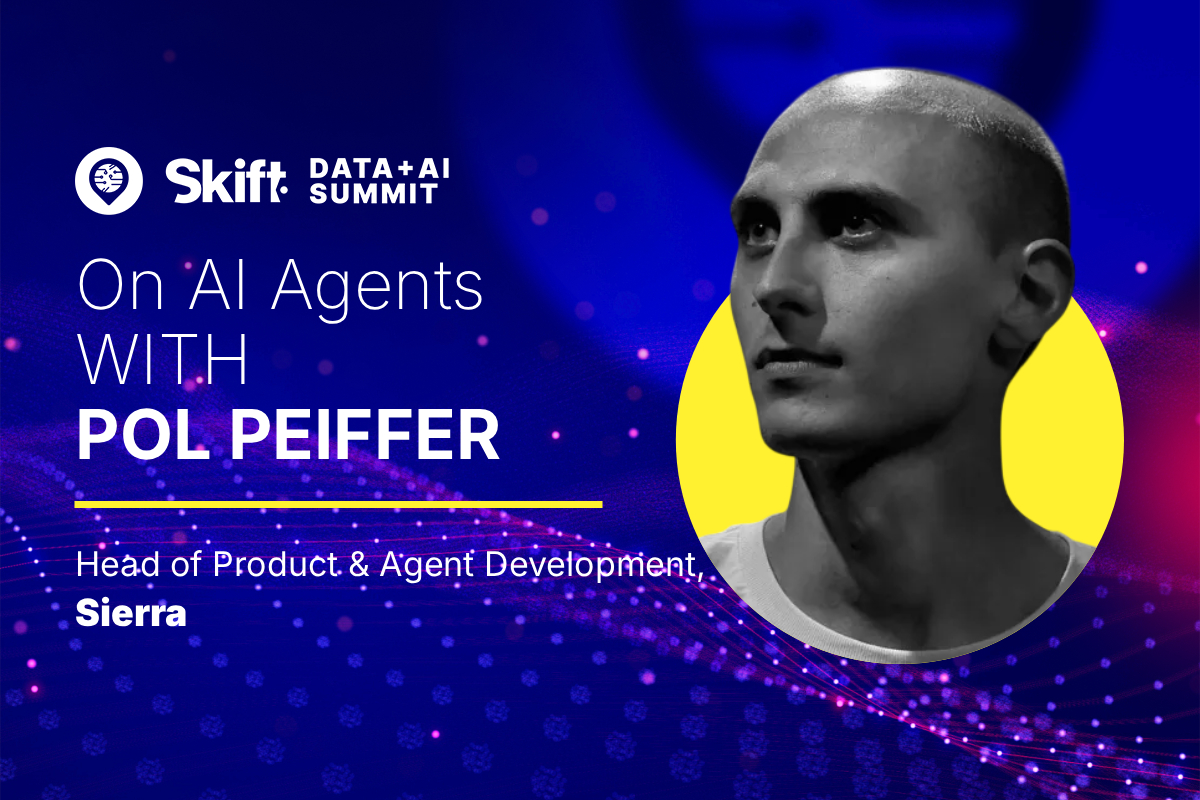
For thirty years, travel companies have been refining the same interaction model: dropdowns, date pickers, filters, forms. Pol Peiffer, Head of Product and Agent Development at Sierra, thinks that era is ending. The next interface for travel is conversation, the agent is the front door, and the timing question has moved from “should we” to “are we already late.”
The Revenue Argument
Peiffer’s central claim cuts against how most travel companies are evaluating AI today. The framing has been cost reduction: fewer support tickets, lower contact-center spend, automation against headcount. Peiffer says that’s the wrong measure of the opportunity. The real unlock, in his telling, is on the revenue side.
“Any CEO offered $10 in cost savings will reinvest $9.99 into growth. The biggest unlock isn’t cost reduction — it’s revenue.”
— Pol Peiffer, Sierra
When the cost of a personalized interaction drops by two orders of magnitude, the constraint on revenue isn’t capacity. It’s imagination about which moments are worth showing up for. The example Peiffer brings is concrete: a premium cruise line that used to lose specialty dining bookings whenever guests couldn’t get through on the phone. The AI agent now captures that revenue across chat and voice, revenue that used to walk away because the unit economics of a human picking up didn’t work.
Two Bars Peiffer Is Setting
1. AI as protection for human judgment. The dominant framing is AI vs. humans: replacement, augmentation, hybrid. Peiffer argues for inversion. AI handles the volume so humans can be fully present for the moments that define a brand: the complicated request, the traveler in crisis, the high-touch interaction where judgment actually matters. One global hospitality group now resolves millions of routine reservation and loyalty questions a year with an AI agent, freeing teams for the moments that build the brand.
2. The conversation as interface. Booking a trip has meant thinking like a database administrator: dropdowns, filters, structured queries. Agents collapse that model. The traveler describes the dream (“a long weekend, a beach, somewhere the kids won’t get bored”) and the agent crafts the itinerary. The implication for travel companies: every customer-facing surface designed around structured input is competing against an interface that doesn’t require any.
The Tension Worth Watching
The real friction may be on the panel itself. Peiffer argues the agent becomes the front door, conversation replacing the structured query model travel has run on for thirty years. He’s seated next to Gaëlle Bristiel, SVP Engineering at Amadeus, a company built on exactly that query layer. Same thesis, structurally different vantage points.
Peiffer joins Gaëlle Bristiel, SVP Engineering at Amadeus, with Vivek Bhogaraju, Executive in Residence at Private Equity, moderating. They’ll discuss the signals to watch to know when an AI system is performing, drifting, or about to fail before it costs customers.
Skift Data + AI Summit 2026 happens tomorrow. The last 5 seats remain.
Register Now
↔️ Plans not final? Reassign tickets later.
🧾 Invoice or wire needed? [email protected]
FOR TEAMS ATTENDING TOGETHER
Group Tickets
u003cemu003eBEST VALUEu003c/emu003e
$895
FOR ONE ATTENDEE
Solo Ticket
u003cemu003eFor single-ticket purchases onlyu003c/emu003e.
$995