
Interview: Norwegian Air CEO on Scaring Regulators and Airlines
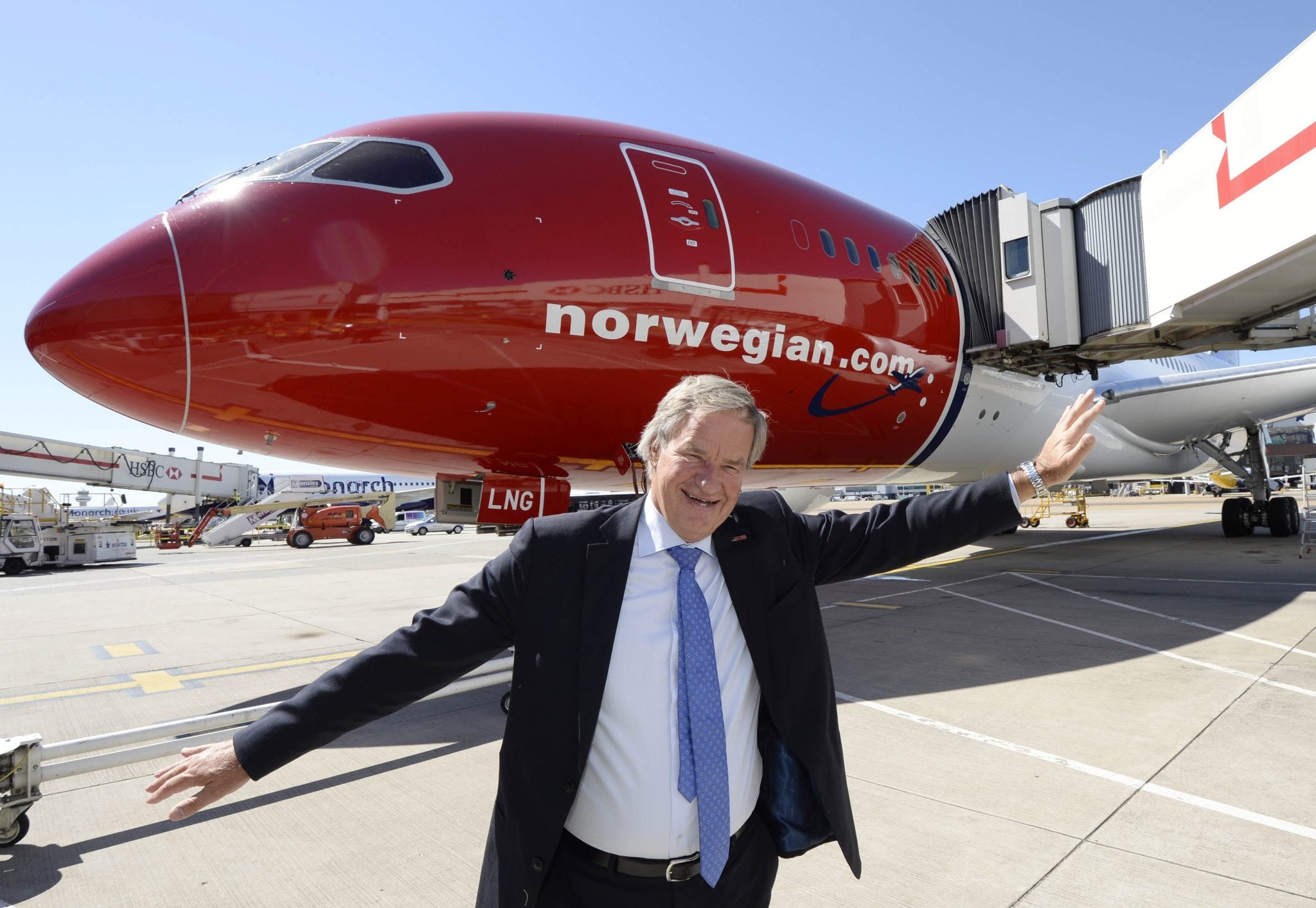
Photo Credit: Norwegian Air CEO Bjørn Kjos said his airline's low cost, long haul model would not work without the Boeing 787. "We couldn't get the figures to add up," with any other plane, he said. Norwegian Air
Skift Take
Many U.S. airlines and their employee unions are concerned about Norwegian's rapid growth — and for good reason. With its low cost, long-haul model, Norwegian is a threat to legacy airlines.

Future of Passenger Experience
To better understand the challenges facing airlines in an age of fluctuating oil prices, rapid growth, and changing passenger expectations, our Future of Passenger Experience series will allow leaders in the industry to explain their best practices and insights.
Few competitors concern legacy U.S. airlines and their employee unions as much as Norwegian Air, a low cost carrier flying Boeing 787s across the Atlantic, connecting cities like New York and London and Los Angeles and Stockholm.
Norwegian is using a model perfected over two decades by several airlines in Europe and the United States, including Southwest, Ryanair, and EasyJet. The others, however, generally have stuck with what they know works — selling relatively cheap fares for short flights. Southwest, Ryanair, and EasyJet do not fly widebody aircraft across oceans.
Norwegian is different. Long a short-haul European operator — it flies Boeing 737s, just like Southwest and Ryanair — it started flying to the United States in 2013, launching with flights between Scandinavia and New York. It has expanded rapidly, adding routes from several European destinations, including London, Stockholm and Paris, to many large U.S. cities. Except for the first months, Norwegian has bee