Airlines Hope Algorithms Can Finally Fix Their Drink Carts
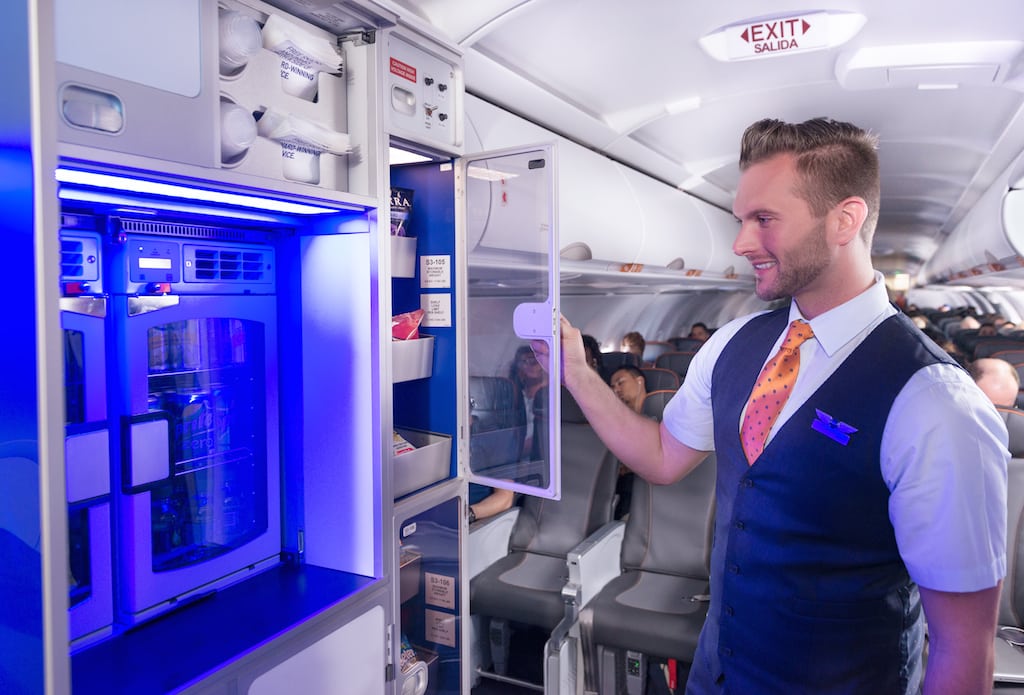
Photo Credit: JetBlue Airways may carry about to 1,000 drinks on its A321 aircraft so it can satisfy passengers in both directions on a transcontinental flight. JetBlue
Skift Take
Passengers sitting in the back of the airplane hate it when an airline runs out of food for sale. But airlines also hate waste, and they usually must throw out uneaten fresh food the same day. How do airlines decide how much food and drink to board? It's a delicate dance.
So EasyJet, among the only airlines with a chief data scientist, asked one of its number-crunchers to examine what items sold on what routes. Within four days, the airline learned demand for many items was far different on a 6 a.m. flight to Edinburgh than on a Friday night flight to Ibiza. But because it was stocking the wrong items on many routes, it calculated it was throwing away three fresh food items after each flight.
Multiply that by every EasyJet departure