
Kuala Lumpur’s Batu Caves Reveal Heritage Tourism’s Struggles in an Instagrammable World
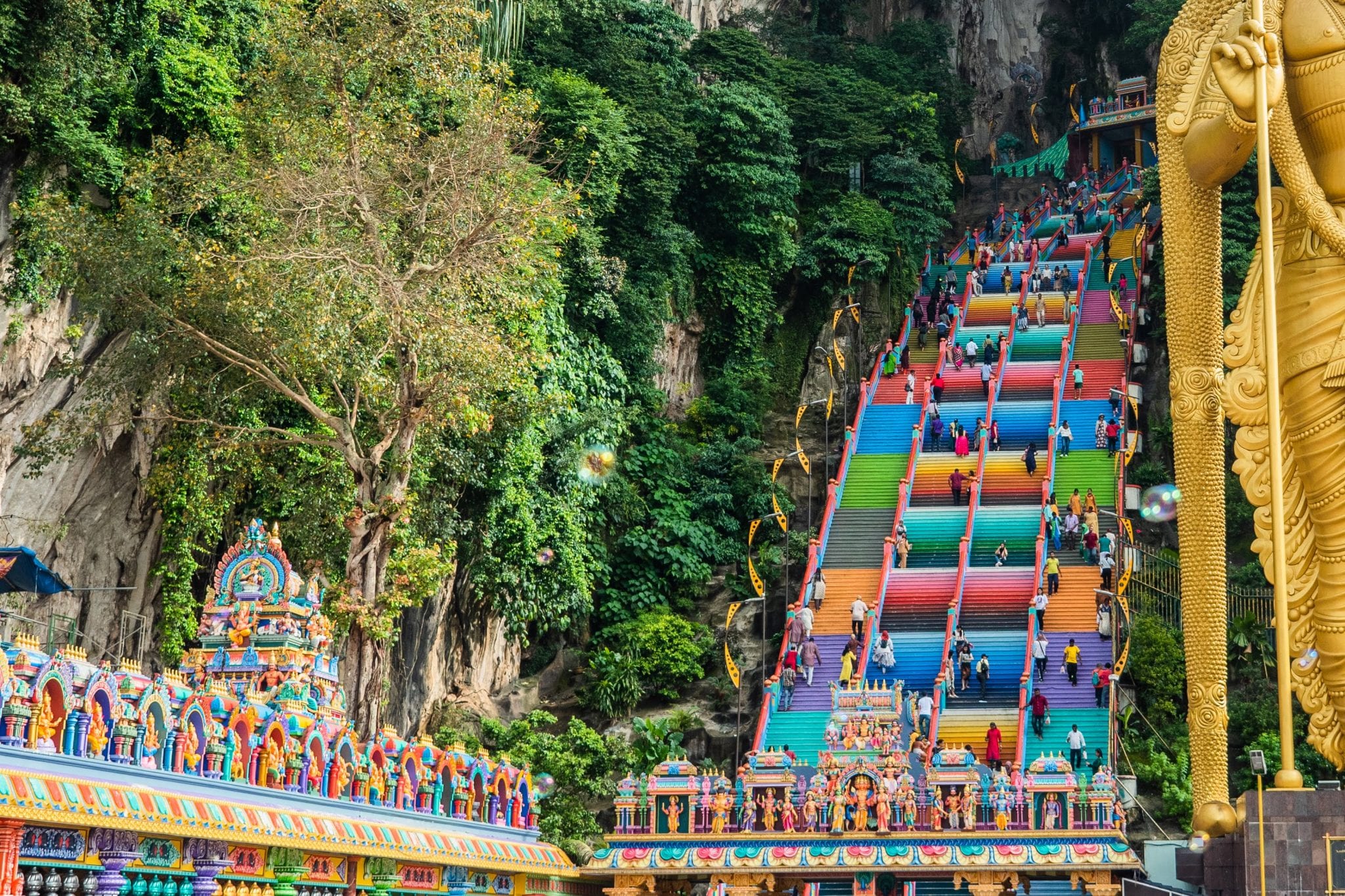
Photo Caption: The ongoing investigation into the painting of the Batu Caves steps points to a greater need for collaboration in order to appropriately preserve heritage sites for future generations. Jack Hallett
Skift Take
The ongoing investigation into the painting of the Batu Caves steps points to a greater need to appropriately preserve heritage sites. Protecting a country’s history and heritage for future generations should come first; increasing the number of Instagram "likes" and "tags" a heritage site gets should come second.
When most people think of Kuala Lumpur, the capital city of Malaysia located in the state of Selangor on the Malay Peninsula, they think of skyscrapers and incredible food from many different cultures — Chinese, Indian, Malay, and more. They typically don’t think of massive caves, native wildlife, and mountainous cliffs jutting out of a tropical jungle.
Thus, my interest was obviously piqued when I found out about Batu Caves, which not only have all of the natural features I just mentioned above, but also have been one of the most popularly visited Hindu shrines outside of India since the late 1800s.
[caption id="attachment_318035" align="alignnone" width="600"] Inside the beautiful main cave of Batu Caves; Photographer: Jack Hallett[/caption]
What's more, Batu Caves, which was inscribed as a Malaysian national heritage site in 2012 (separate from UNESCO’s World Heritage Sites), is currently the center of a controversial, ongoing investigation.
A fresh coat of paint