
How United Is Chasing Revenue by Adding More Premium Seats
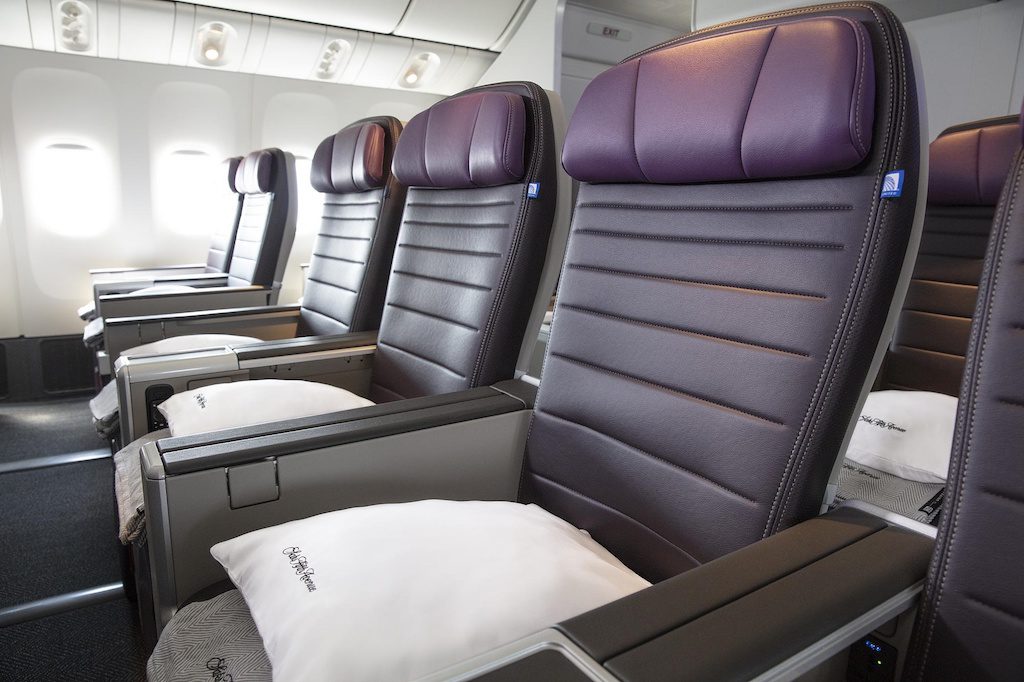
Photo Credit: United Airlines may soon unveil a new configuration for some Boeing 767s. The seating plan could include premium economy seats like the ones pictured here. United Airlines
Skift Take
By adding a new premium-heavy configuration, United Airlines will be increasing operational complexity. It is hoping it can offset that with increased revenue. Will the plan work?
Let's say you're designing a seating plan for one airplane in your fleet. Would you rather have a standard configuration, even if it isn't best for every market? Or would you prefer several seating plans to match capacity to demand?
The easy answer is you want the best configuration by route. If you have a transatlantic operation, your airline may want 40 (or more) business class seats for London and Geneva, and 18 for Barcelona, Nice and Naples. On those leisure-oriented aircraft, you can add more economy class seats for vacationers.
Here's the problem. Because it is challenging to change seating plans once an aircraft is in service, many airlines prefer one standard configuration for each plane type, even if that means having too many premium seats for Nice and too few for London. You may lose revenue, but you can run a more efficient operation, because you can schedule any plane on any route.
Still, some airlines are willing to take chances on multiple configurations. And a