


Generation Next: The Risk Takers
Skift Take
Women aren’t afraid of risk – but they do face unique challenges. These leaders have blown past them and are reshaping the travel industry in the process.
Successful women often have a complicated relationship with risk. I come by these words honestly. If I could send a note to my younger self, it would say (at the risk of bordering on cliche): Take more chances, choose discomfort, do the thing that scares you.
But as I get deeper into my career, I see that it’s not that women are risk-averse, it’s that the downside hits us harder – fewer second chances, louder scrutiny, shorter runways. We see it in the glass cliff, the reputational tax, or the funding penalty after a miss.
So for this year’s Generation Next, we chose to honor those women who faced the hard choices and decided to jump anyway. We’re calling it The Risk Takers. You’ll find “intrapreneurs” at legacy brands rewiring systems, founders building what the status quo ignored, and creatives and operators who made tough calls with uncertain outcomes – and pushed boundaries in the process.
Risk looks different depending on who holds it. But the common thread is simple: originality, measurable impact, and the nerve to say “go.” They’re the ones who want the ball at the buzzer.
Travel is a leverage business — planes, pipelines, platforms. Leadership is the willingness to make a non-obvious bet and own the consequences. These women are doing exactly that across product, strategy, sustainability, design, tech, communications, and operations.
Our assignment is equally clear. Reward smart risk. Stop confusing caution with wisdom. And pay attention to the people changing the odds, not just playing them.
Enjoy Generation Next: The Risk Takers.
– Sarah Kopit, Editor-in-Chief

Women Leading Travel Forum 2026:
empowering leaders through innovation and connection.
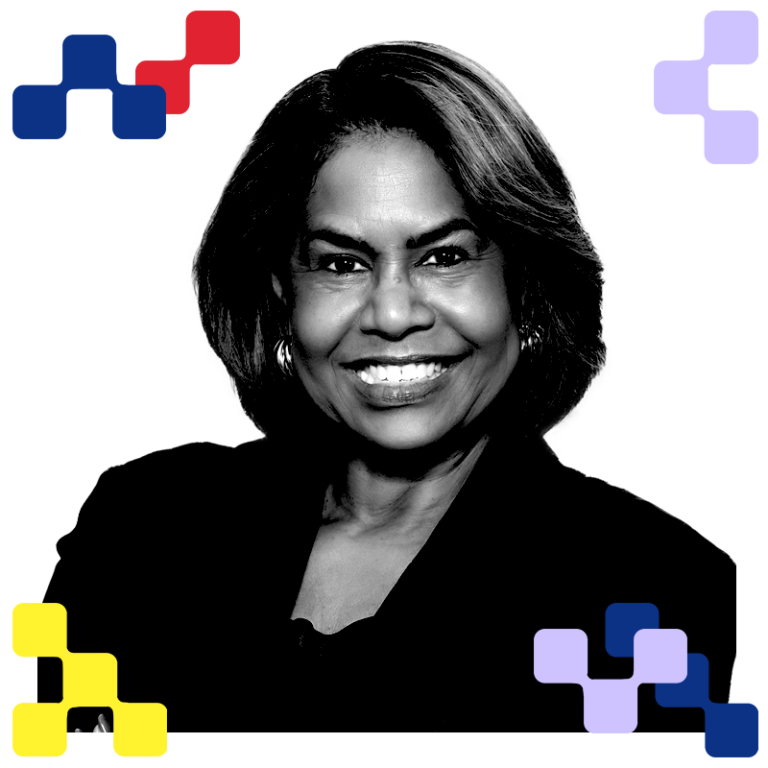
Julie Coker
NYC Tourism + Convention President and CEO
New York City’s $52 billion visitor economy is heading into one of its highest-stakes periods yet — and Julie Coker knows it. As President and CEO of NYC Tourism + Conventions, Coker is preparing the city for an unprecedented confluence of global events: the 2026 World Cup, the city’s 400th anniversary, and a volatile political environment that’s put DMO funding on the chopping block.
“We don’t have the luxury of failing,” she says. “New York is a well-oiled machine. We find another gear and we keep going.”
But risk isn’t new to her. Long before Coker took the helm of one of the world’s most high-profile DMOs, she left a two-decade career at Hyatt – leaving corporate stability for the uncertain world of destination marketing. “We were coming out of the financial crisis, and I walked away from a company where everyone knew me,” she says. “But I wanted a larger footprint and a greater impact.”
And that gamble paid off, and it shaped her philosophy on leadership. “Women often wait until every ‘i’ is dotted,” she says. “But one of my mentors told me, ‘Men talk in headlines. Women talk in fine print.’” That line stuck with her — and still fuels how she mentors others.
In New York City, Coker and her team are doubling down on strategic partnerships and inclusive growth, focusing on women- and minority-owned businesses while defending New York’s place as a global tourism hub. She’s working to protect the jobs, tax base, and international stature that depend on a thriving visitor economy — even as budget scrutiny intensifies and political support wavers.
Coker’s approach to risk isn’t just disruption for disruption’s sake. It’s about scale, visibility, and power. Or as her mother once put it: “If you’re not nervous, then it’s not a big enough job.”
Clearly, Julie Coker is just getting started.
– Sarah Kopit

Annick Guérard
Transat President and CEO
When Annick Guérard joined Transat after 9/11, she was just starting her journey in the travel industry. Two decades later, she took over as president and CEO — right as the company faced the unprecedented challenges of Covid.
Guérard has built a reputation for balancing risk with strategic discipline. In 2019, as Transat’s chief operating officer, she helped orchestrate the sale of the company to Air Canada. The transaction collapsed when EU regulators refused to approve it without additional concessions.
Left on its own, Transat scrambled back to profitability under Guérard’s leadership, forging a joint venture with an increasingly influential Porter Airlines, boosting ancillary revenues, adding new planes and destinations, slashing costs, and restructuring an emergency government loan it received during Covid. These initiatives have underpinned Guérard’s “Elevation” turnaround strategy, which is focused on diversifying revenue and sharpening Transat’s pricing and capacity strategies.
The path ahead won’t be easy. Air Transat, the company’s wholly-owned airline, still can’t fully utilize its aircraft because of engine issues. The Canadian economy is vulnerable to U.S. tariff policies. Transat’s business is highly seasonal, requiring timely shifts of assets to southern sunshine markets during winters and transatlantic markets during summer. Air Canada, most importantly, remains a tough competitor.
Having steered Transat through a near-death experience, Guérard now faces the challenge of keeping it competitive – and profitable – in a rapidly evolving market.
– Jay Shabat

Megha Bhatia
Eve Air Mobility Chief Commercial Officer
After more than a decade at Rolls-Royce – where she helped deliver record-breaking sales – Megha Bhatia made a career leap that would make many aerospace veterans pause for thought. Last September, she joined Eve Air Mobility, a start-up that doesn’t expect meaningful revenue for several years.
“It’s about what motivates you,” she tells Skift. “When I was really young, my father always said to pursue something that gives you fire in your belly.”
For Bhatia, that fire now burns at Eve, a company developing electric vertical aircraft (known as eVTOLs in the trade). She’s betting on a sector still facing regulatory, technological, and public acceptance hurdles. But her belief is clear: “Fundamentally, I do think it’s a new era of aviation.”
Bhatia is better placed than many to offer this assessment. She holds an aerospace engineering degree from Embry-Riddle University, paired with a master’s in business. It’s a heady combination she describes as “the perfect cocktail.”
As chief commercial officer at Eve, Bhatia leads global sales, market intelligence, and government relations – a critical portfolio as the firm eyes an ambitious 2027 entry into service. With letters of intent for over 2,800 aircraft across 13 countries, the pipeline is substantial. “We’re working with our customers hand-in-hand to convert that leading order backlog into firm orders,” she says.
Bhatia describes Eve as offering the “best of both worlds,” combining the legacy of Brazilian aerospace firm Embraer, and the agility of a start-up. She sees the company’s mission as more than technical innovation: “It’s about solving the infrastructure problem of our cities. There’s going to be two billion more people in urban areas by 2050. We need new ways to move.”
That sense of purpose fuels her transition into less certain skies. “It’s a huge challenge,” she acknowledges. “But when you push boundaries and encourage an exchange of ideas, that’s when you find new ways to create value.”
– Gordon Smith

Güliz Öztürk
Pegasus Airlines CEO
Turkish Airlines gets most of the attention, but Pegasus Airlines is no less a success story. As it happens, Pegasus CEO Güliz Öztürk spent her early career with Turkish Airlines, rising to various senior vice president roles.
When new investors purchased Pegasus in 2005, they adopted its current low-fare business model, hiring Öztürk to help with the transition. In 2022, just as the global airline industry was emerging from the Covid downturn, she became chief executive, charged with piloting the airline out of the crisis.
Under her leadership, Pegasus has delivered operating margins of 20% in 2023 and 17% in 2024 – among the highest in the global airline industry.
One of Öztürk’s boldest moves came in December last year, with an order for up to 200 Boeing Max jets. Buying planes at this scale is always ambitious, but there are other factors at play, which speak to her appetite for risk. Pegasus will take the largest version of the Max, the -10 variant that can seat about 230 passengers. That’s a lot of seats to fill, and broadly comparable with some widebody planes.
It was also bold because the Boeing buy represented a defection from Airbus. Pegasus was originally a Boeing carrier but shifted to the European firm in 2012. The switch back suggests Öztürk and her team were able to negotiate a highly attractive deal.
What lies next for Pegasus? Öztürk intends to maintain the airline’s aggressive expansion, while working to become an industry leader in adopting AI. Competition will be tough, as Turkish and other carriers expand. If recent results are any guide, Pegasus under Öztürk is poised to meet that challenge head-on.
– Jay Shabat
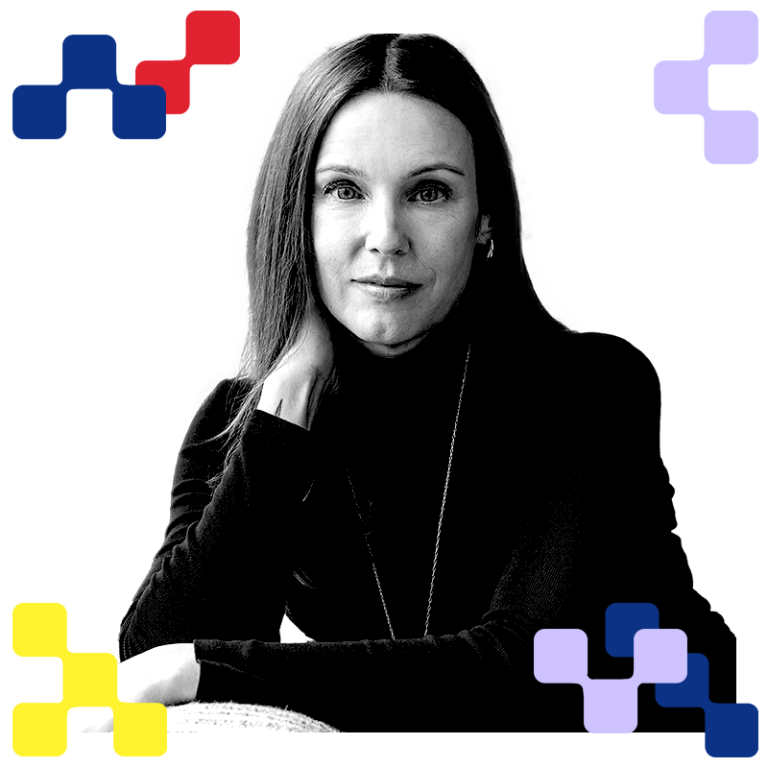
Henley Vazquez
Fora Travel Co-Founder
Fora Travel is only four years old, but already the innovative travel agency has built up a network of 10,000 active travel advisors in 92 countries – and processed $1.5 billion in bookings.
The concept for Fora Travel Co-Founder Henley Vazquez and her co-founders was to drop the barriers that had kept people from becoming travel agents.
“My dream was, bring new people in, give them an opportunity. The question was, can they really do the job,” says Vazquez. “So now I say, ‘Well, we’ve got a billion dollars in sales that says, yes they can.’”
Vazquez didn’t grow up traveling. She was born on a farm in Virginia and got into the business “by accident” in the late-2000s after working at Town & Country magazine. She joined her editor who had left to start a company that became a travel agency.
By 2014, she had started her own travel agency and she learned the pressures of running a business. “A lot of what I was doing was drowning under the weight of running a small business instead of thriving under the opportunity of planning all these amazing trips,” she says.
That experience has helped shape what Fora has become. “So with Fora what we wanted to do was take that experience I had and offboard all of that,” she says. “We’ll handle your back office. We will give you marketing. We will give you training. We will give you community. All of which can make it easier to enter this business and build faster.”
It’s been particularly impactful for women – 86% of Fora’s travel advisors are female. Vazquez knew their careers had been hit hard during the pandemic. “I felt like if we could do something to make a difference there and create opportunities – let’s go,” she says.
Vazquez, age 47, an executive with three kids and a dog (Vida, a rescue from Costa Rica), understands the unique challenges women face balancing careers and running households. “It’s hard to juggle that life at home. This morning when I’m making breakfast for the kids, I’ve always got my laptop open and I was responding to emails and my 8-year old daughter was trying to talk to me,” she says.
She is especially proud of the supportive Fora community. There are groups in the community that discuss care for aging parents, for example, and issues for new parents.
“I think we are stronger together. That is a big part of the ethos of Fora.”
– Lex Haris

Abeer Al Akel
Royal Commission for AlUla CEO
While Saudi Arabia is home to several high-profile tourism megaprojects, AlUla has carved out a distinct identity: Its focus lies not in futuristic skylines, but in heritage, culture and community — values that Abeer Al Akel has placed at the center of her leadership for nearly eight years.
She joined the Royal Commission for AlUla (RCU) in early 2017 as head of strategic delivery and was appointed CEO in March this year.
AlUla had 286,000 visitors in 2023 and is targeting 381,000 this year. By 2030, the goal is to attract one million visitors annually. But the plans extend beyond tourism numbers — the commission also aims to create 38,000 new jobs, contribute $32 billion to the Kingdom’s GDP, and grow the region’s population to 130,000 by 2035.
The area has become known for hosting some of Saudi Arabia’s most visually striking hotels, such as Habitas and Banyan Tree. For many international travelers, these properties offered a first glimpse into the Kingdom’s potential as a cultural tourism destination.
Yet Al Akel is careful to balance growth with preservation.
“As guardians of AlUla’s cultural and natural landscape, we have prioritized sustainability from the beginning,” she said during Riyadh’s Future Investment Initiative last year. “Our mandate is to comprehensively regenerate AlUla, and to do that, we must strike a balance between development and advancing the ecosystem of AlUla.”
– Josh Corder

Katie Johnson
Hyatt VP & Global Brand Leader
As vice president and global brand leader at Hyatt Hotels, Katie Johnson is orchestrating one of the industry’s most audacious plays: persuading fiercely independent luxury hoteliers to join a major hotel group without compromising their distinctive, Instagrammable authenticity.
When Johnson joined Hyatt through its 2018 acquisition of Two Roads Hospitality, the company had just one soft brand – The Unbound Collection by Hyatt – with fewer than 15 properties. Today, that portfolio has grown to 50.
Several ownership groups are now developing multiple properties within Hyatt’s soft brands (which include Unscripted by Hyatt and JdV by Hyatt). They’re creating “micro-chains” of “passion projects and family legacies,” or what Hyatt calls “nest-brands.”
Johnson says that when she leapt from an independent luxury operator to a publicly traded giant, “it was a risk.” Hyatt has embraced her approach.
Besides spending about 30% of her time wooing potential owners to join the soft brands, Johnson helps refine the strategies at Hyatt’s flagship “hard” luxury brands. “One of the outcomes I’m most proud of is the trust we’ve built with our owners,” she says.
At Park Hyatt, Johnson has pioneered workshops that pair marketers with operations, disciplines that otherwise rarely collaborate. Projects include helping hotels better communicate what makes their localities special and ensuring that marketing aligns with what guests experience.
Johnson says her background as a competitive tennis player shaped her edge.
“I say to my boss, ‘Put me in, Coach,’ I’m willing to play in any role.”
Johnson is passionate about helping others. She serves as a mentor to many in the Rising Leaders program at the Hospitality Sales and Marketing Association International, or HSMAI. She also participates in Women Leading Travel & Hospitality and Hyatt’s RiseHY program, which cultivates untapped talent from underserved communities for careers in hospitality.
“I want others to feel my deep passion for hospitality,” Johnson says.
– Sean O’Neill

Vanessa Hudson
Qantas Group CEO
When Vanessa Hudson took the reins of Qantas Airways in 2023, the carrier had taken a major bruising. Allegations surfaced that Qantas had misled customers by selling tickets for flights that had already been canceled. Post-pandemic, customers were frustrated with high airfares, while unions expressed frustration over job cuts as Qantas received multi-billion-dollar government subsidies.
When former CEO Alan Joyce decided to retire early, Hudson was saddled with the daunting task of rehabilitating the Australian flag carrier’s image and restoring its profitability.
Nearly two years in, Hudson – who started as an accountant and eventually became Qantas’ CFO – has already done that. The airline now boasts higher operating margins than it did before the pandemic.
Under Hudson’s leadership, there has also been a shift in company culture. “In the past, it felt like Qantas was run on fear. Now it’s starting to feel like workers are being viewed as people rather than a set of numbers,” said Terri O’Toole, the federal secretary of the Flight Attendant Association of Australia.
Hudson faced her first major crisis as CEO when Qantas experienced a cyberattack in July. Hudson was on vacation in Greece with her family. But as soon as she heard the news, she “dropped everything, this was 100% of my focus — responding to the team,” she told the Sydney Morning Herald.
Over the next few days, Hudson released a video statement apologizing for the incident, and the airline released minute-by-minute updates.
The transparent approach shows Hudson’s leadership style. “My philosophy is more one of servant leadership,” Hudson said in an interview with Bloomberg in March. “I fly in cockpits, I stand in galleys, I walk around engineering facilities.” She says it’s the best way to hear from staff what’s working – and what’s not.
– Meghna Maharishi

Robin Kennedy
Montage International EVP and Chief Development Officer
With over two decades in hospitality development spanning both brand and owner sides, Robin Kennedy is among the rare executives who have moved from operations to ownership and then back again.
When she joined Montage as Chief Development Officer in 2016, the company had just four hotels and was launching Pendry into a market where Marriott and Starwood were combining.
Since Kennedy’s arrival, Montage has expanded to have 15 open hotels and 15 properties in development through 2030. It’s building in Mexico City, Punta Mita, and Barbados while quietly pursuing opportunities elsewhere.
While other hotel groups chase unit counts, Kennedy focuses on what she calls the “four P’s”: “people, project, program, and, importantly, partners.” Each new Montage or Pendry requires years of development with carefully vetted partners, crafting bespoke programming that can’t be pulled “off the shelf.”
“Luxury is difficult to scale, and it should be,” she insists. “It’s a crafted endeavor.”
Her team obsesses over operational details, such as kitchen-to-poolside distances for waiters to bring food.
Kennedy says she stands apart from some other leaders through her directness. “I talk all the time about activity and productivity and how those are not the same thing,” she explains.
After a friend challenged her by saying that her “humility serves no one” in an industry where women are underrepresented, Kennedy has become more willing to share the spotlight as a female leader in an industry where women comprise the majority of employees.
Kennedy shares a saying that guides her through the precarious world of luxury hotel development: “Leap and the net will appear.”
– Sean O’Neill

Amelia DeLuca
Delta Chief Sustainability Officer
Amelia DeLuca stepped into sustainability leadership at Delta Air Lines with a clear understanding of the stakes and the skepticism many would have. In an industry often criticized for slow progress, she is tasked with charting a credible path to reduce emissions by 2050.
A Delta veteran of nearly two decades, DeLuca transitioned from commercial planning roles to sustainability during the pandemic, a pivot she describes as deeply personal.
“I’m a mom of two girls and I want them to be able to fly,” she says. That motivation continues to guide her efforts to align Delta’s climate strategy with operational and commercial realities.
Under her watch, Delta created what it calls a Carbon Council, an internal group where senior executives meet regularly to decide on sustainability initiatives, including ways to improve fuel efficiency.
DeLuca has also supported experimental projects, including a sustainable aviation fuel blending hub in Minnesota and a long-term partnership exploring a radically redesigned aircraft model that could reduce flight emissions by up to 50%.
DeLuca describes her role less as a technologist and more as a connector, someone who can bridge internal silos and keep long-term climate goals on the agenda.
“I do not think of this as a sustainability company that flies airplanes,” she says. “We are an airline first. But we are going to run it as sustainably as we possibly can.”
– Darin Graham

Maud Bailly
Sofitel, Sofitel Legend, MGallery, and Emblems CEO
Maud Bailly took the helm of four of Accor’s luxury brands in January 2023 with a single mandate: Make them matter again. Her first move wasn’t a rebrand or splashy campaign. It was a global listening tour.
For six months, Bailly visited properties from Bangkok to Buenos Aires, asking hard questions about what these brands stood for. Her conclusion: Too many promises, too little clarity.
At the center of her strategy is what she calls a “reignition journey” – a full-scale overhaul of brand pillars, visual identity, service training, and owner engagement. Bailly isn’t trying to invent a new luxury language. She’s trying to make these brands unmistakably clear in what they offer and to whom.
“To last, a brand needs to rely on a very strong brand, a clear, distinctive identity, a consistent, clean, elevated network, and a strong culture,” she says.
That clarity now drives all decisions. A third of Sofitels and half of Sofitel Legends are under renovation. Ten hotels have been cut. Emblems will open its first UK location this fall. Across all four brands, 98 hotels are in the pipeline.
Bailly is focused on alignment between product, promise, and the people delivering it. She’s rolled out new service culture programs – ‘I Love, I Live, I Lead My Brands’ and ‘Luxury Foundations’ – aimed at sharpening identity and frontline delivery.
Before joining hospitality, Bailly worked in the French Prime Minister’s office, mediating between ministries on digital and economic policy. Later, as Accor’s digital chief, she led the company’s pivot to cloud infrastructure and cybersecurity. Both roles shaped how she leads now: Decisive, collaborative, and with no tolerance for vagueness.
She doesn’t talk about disruption. She talks about discipline. “A luxury brand is never a given, because luxury brands can get born, rise, and die.”
– Luke Martin

Nina Herold
Reed & Mackay Incoming CEO
Nina Herold, the incoming CEO of UK-headquartered Reed & Mackay is known for her operational leadership and appetite for managing risk. Formerly the chief operating officer at Navan, the travel and expense management platform that acquired Reed & Mackay in 2021, Herold has played an integral role in scaling businesses and embracing innovation within high-growth, tech-driven travel companies.
Herold joined Navan (formerly TripActions) in 2018 and quickly rose through the ranks, progressing from business operations to chief product officer, and then to COO by 2023.
Herold’s tenure at Navan coincided with a turbulent period for business travel. As the sector worked to rebound from the pandemic, companies like Navan faced unpredictable demand, shifting client budgets, and evolving traveler expectations.
Navan competes with the likes of SAP Concur, Expensify, Amex GBT, TravelPerk, and newer fintech-led platforms. Herold has had to oversee the growth of Navan’s core travel and expense platform, manage strategic partnerships, and ensure product differentiation.
Before Navan, Herold held leadership roles at Uber, where she helped scale operations globally and collaborated closely with product and engineering teams.
Herold’s transition to CEO of Reed & Mackay comes at a key juncture in the company’s growth trajectory. Navan has invested heavily in combining its technology platform with Reed & Mackay’s high-touch, service-oriented approach to corporate travel. Herold will be charged with enhancing that integration.
– Dennis Schaal

Janet Yungwirth
Ritz-Carlton and Ritz-Carlton Reserve Global Brand Director, Culture
When The Ritz-Carlton partnered with Madrid streetwear label Late Checkout on a merch drop that morphed into a moody brand film, few expected it to snag a Cannes Lions award – or reset how a 40-year-old luxury brand shows up in culture.
Behind the scenes, Janet Yungwirth shaped the campaign’s creative direction, bringing an arthouse sensibility rarely seen in luxury hospitality.
The four-minute film was a surreal take on hotel service, built around a quirky character and layered with cinematic flair.
“We definitely knew we were taking a big risk. Our service culture is our business strategy. So, having an actor portray that and not a trained employee was stressful, honestly,” Yungwirth says.
It worked. The film beat Prada at Cannes, winning gold for brand storytelling. And the response wasn’t limited to Gen Z: longtime Ritz-Carlton general managers praised the campaign as a breakthrough.
Produced and distributed for under $1 million, the campaign generated over 15 million impressions across Instagram and other platforms. It was the most-shared content across Marriott’s luxury portfolio last year.
Yungwirth joined Marriott in 2018 after building brand narratives in media, with roles at Forbes, The New York Times, and Hearst. That outsider’s view now informs how she’s evolving Ritz-Carlton’s image, from storytelling and partnerships to yachts, Formula 1, and a safari camp in Kenya.
Yungwirth brings that same sense of creative risk to her leadership style, building team culture around openness and trust. “You can have talented people on your team, but if that chemistry and connection isn’t fostered […] that is a barrier from a leadership perspective,” she says. Her aim: a team environment where everyone feels confident sharing ideas, even the unexpected ones.
For Yungwirth, risk is about setting direction. “If you’re looking backwards,” she says, “you’re never going to achieve something focused in the future.”
– Luke Martin

Yvonne Moynihan
Wizz Air UK Managing Director
Yvonne Moynihan has never been one to take the obvious path. From a legal career at the Irish courts and now leading Wizz Air’s UK operations, her career has been defined by a comfort with uncertainty. “I usually take the road that is less traveled,” she says.
After cutting her teeth in defamation law, she pivoted to aviation with Ryanair in 2014, then took a major risk in 2019: moving to Barcelona with a six-month-old baby and two dogs to take on a General Counsel role at Vueling.
That move, she says, “absolutely paid off,” setting the stage for her transition into sustainability leadership at Wizz Air. She has made a mark by turning transparency into a competitive edge. “We decided the best way to tell our story was through data,” she says. Wizz’s carbon intensity disclosures earned it the top spot in CAPA’s environmental airline rankings, amongst others.
Now based in London and commuting by coach to Luton each day – “door to door, low-cost and sustainable” – Moynihan leads Wizz Air UK as it ramps up expansion, including new routes to Spain and future long-haul ambitions.
She brings a people-first focus to her leadership, grounded in operational resilience and adaptability. “I like to reinvent myself like Madonna,” she says, half-jokingly, “and that’s what leadership is, evolving with change and generations.”
Under her leadership, Wizz is betting on newer, more efficient aircraft and preparing to operate long-range flights without abandoning its low-cost ethos. “More seats, fewer emissions per passenger,” she says. “That’s the future of flying.”
– Darin Graham

Jeanelle Johnson
Managing Partner PwC DC
Jeanelle Johnson is a first-generation American whose career has been marked by strategic risk-taking and leadership in the AI and cloud transformation space, particularly within the travel and hospitality industries.
Born to parents from Jamaica — a Caribbean island dependent on hospitality and tourism income — and raised in Miami, her early exposure to hospitality helped shape her professional focus. Her career began with an unpaid internship working on Washington, D.C.’s 2012 Olympics bid.
After getting her MBA at the University of Maryland, Johnson turned to mergers and acquisitions involving hospitality properties and brands.
“One of the bigger risks I took was being in the M&A world and thriving in complex, big, messy, hairy deals,” Johnson says. “That has been my specialty, working on some more complex transactions, working with private equity sponsors.”
These roles demanded a strong appetite for risk as she navigated deals after the global financial crisis and worked extensively with private equity sponsors.
Her move to London in 2010 – “with a baby in a backpack” – further shows her willingness to embrace challenges. Returning to the U.S. in 2015, Johnson joined PwC in New York, continuing her work in corporate finance and M&A before relocating to Washington, D.C. in 2017.
Johnson now serves as the travel, transportation and hospitality leader at PwC D.C., and managing partner, where her focus is on guiding major brands through digital transformation initiatives.
Johnson is candid about the slow pace of technological change in this sector, emphasizing the critical need to overcome legacy “tech debt.”
“So for hospitality companies, the moral of the story is, make some progress,” Johnson says. “It’s not going to be everything you want in the first iteration, but you have to continue the momentum. And the opportunity, obviously, could be mammoth.”
– Dennis Schaal

Deepika Arora
Dusit International Head – India and Rosastays Founder
Deepika Arora started her career in design and real estate before she joined Hilton as the Director Development – India. From there, she went to Wyndham, and then Dusit. She also launched her own boutique hospitality brand Rosastays.
“I was instinctively drawn to travel because it allowed me to combine creativity with meaningful community impact,” she tells Skift.
For Arora, who has been leading teams for decades, leadership is about building ecosystems where teams feel empowered to innovate while maintaining operational rigor. Under her guidance, Rosastays put in place the philosophy of destination-led storytelling at a time when boutique hospitality was still emerging in India. “We integrated locally rooted dining, community-led experiences, and wellness offerings even in midscale segments — well ahead of market trends.”
She relies on the same philosophy at Dusit, with Thai-inspired service adapted to Indian sensibilities.
“I encourage my teams to think entrepreneurially, whether it’s introducing sustainability initiatives like zero-waste kitchens or curating bespoke wellness experiences,” she says. “The goal is always to deliver memorable, sense-of-place experiences while maintaining brand integrity and operational consistency.”
Hospitality is fundamentally a people-driven industry, and Arora believes that leadership must reflect that. “I set a clear vision but give teams the autonomy to make decisions, innovate, and take ownership of outcomes.”
And for young women starting out in the hospitality industry, she has one message: “Be bold and don’t limit yourself to traditional pathways. Ask for the big assignments, speak up in important rooms, and be unafraid to challenge the status quo.”
– Bulbul Dhawan

Shaikha Nasser Al Nowais
UN Tourism Secretary-General Elect
On May 30, Shaikha Nasser Al Nowais stunned the global tourism sector by being named Secretary-General Elect of UN Tourism. She will officially take the helm in January 2026 for a four-year term, becoming the first woman and the first Emirati to lead the organization.
For the UAE, Al Nowais’ win represents a pivotal shift. Rather than playing catch-up with the world’s leading tourism destinations, the country now finds itself in a leadership position. Domestically, UAE tourism businesses have been encouraged to approach Al Nowais for support — particularly when it comes to elevating local issues onto the global stage.
“Tourism is a connector,” Al Nowais says. “It bridges between cultures and bridges between people, and it should always be focused on being a good force so people will continue to want to travel.”
Al Nowais currently serves as corporate vice president at Rotana, a hotel group headquartered in Abu Dhabi where she oversees owner relations across the Middle East, Africa, Eastern Europe and Turkey.
She is also the daughter of Nasser Al Nowais, Rotana’s co-founder and chairman, who previously founded and chaired Abu Dhabi National Hotels, one of the UAE’s key government-owned hospitality groups.
Reflecting on her career, she acknowledged the challenges of working in a male-dominated field.
“I’ve been working in the tourism industry, the hotel industry particularly, for the last two decades,” she says. “It’s a people-oriented type of mental industry, and it takes a lot of time and effort. … But they don’t know the fact that when women are there, they actually do make a difference.”
– Josh Corder

Melissa Cherry
Miles Partnership SVP
Melissa Cherry, now Senior Vice President at Miles Partnership, says she entered the tourism industry “purely by accident.”
With a background in art history, public arts, and urban planning, she began her career at an art gallery at the University of Southern California. There, she met the son of the then-director of cultural tourism at the Los Angeles Convention and Visitors Bureau, a meeting that led to her first tourism role.
At the bureau, she worked on marketing and communications to raise awareness of Los Angeles’ cultural destinations. “I had the opportunity to start in this industry at a time when arts and culture were not considered as a branding differentiator for destinations,” she says.
That early experience launched a career that’s spanned several leadership roles. Cherry led marketing at the Chicago History Museum, Choose Chicago, and Destinations International.
She joined Miles Partnership four years ago, where she leads its DEI consulting practice. She helps shape internal practices and leads work on inclusive marketing strategies across the travel and tourism sector.
“Miles has been a wonderful opportunity for me to bring my skill set in terms of marketing, communications, branding partnerships, and community engagement,” she explains.
Cherry admits the politicization of DEI has made the work harder. “Work is work. So, ensuring that travel is welcoming and ensuring that we’re doing inclusive messaging from a marketing perspective is really important.”
Her leadership style is collaborative: “I don’t need to be the one that’s at the center of it.”
Her advice to young girls? “Have focus… along with confidence and believe in what you can do.”
– Bulbul Dhawan

Narawadee Bualert
lebua Hotels & Resorts President and CEO
In the wake of Thailand’s 1997 financial crash, Narawadee Bualert helped transform a half-built tower into a luxury brand that would go on to reinvent Bangkok’s hospitality skyline.
“My mother, a true high-risk, high-return entrepreneur, acquired a 330,000 square meter, 67 story tower, with a total of 1,716 condo units in Bangkok CBD… When the 1997 Tom Yum Goong financial crisis hit, demand for condos vanished. Rather than give up, we decided to transform the unsold units into hospitality space,” Bualert says.
Her first move? Opening Sirocco in 2003, an open-air rooftop restaurant no one believed in, not even her own management. “We had hired a management company to run operations, but they wanted nothing to do with an open-air rooftop restaurant. It felt too risky, too unconventional,” she says.
Undeterred, she launched it herself. Today, Sirocco is considered to be one of the world’s most iconic dining destinations.
Another big project was lebua at State Tower, home to two Michelin-starred restaurants, two rooftop dining venues, and six bars. “It was a radical vision,” she says, “but I’ve always believed that breathtaking views and heartfelt hospitality can turn an idle building into something truly extraordinary.”
Bualert has faced a number of crises and has worked to protect her team. During Covid, she retained every team member and ensured their families were vaccinated.
Next up: A boutique cruise line is on the horizon. “Not a conventional cruise, but something smaller, more intimate, and experience led, a floating extension of lebua that blends fine dining, wellness, and curated lifestyle moments. It’s early, but the vision is there.”
It’s part of a pattern of setting trends – not chasing them. “The benchmark was never what others were doing,” she says. “It was what others hadn’t dared to try.”
– Peden Doma Bhutia

Amy Martin Ziegenfuss
Carnival Cruise Line CMO
When Amy Martin Ziegenfuss moved from hotel giant Hilton to become chief marketing officer at Carnival Cruise Line in 2023, it might have looked risky on paper. But she’d already repositioned brands like Hampton and helped create one – Motto by Hilton – from scratch. For her, the shift to cruises was seamless.
“For me, it didn’t seem like a leap,” Ziegenfuss says. “I came to it with the belief that the fundamentals of hospitality are the same regardless of the setting.”
She took over marketing at Carnival during a full-throttle transformation. She’s especially proud of launching a campaign for Celebration Key, Carnival’s new exclusive destination in Grand Bahama, a year and a half before “the destination was even built.” Her team targeted major sports events like the NFL Championship and NBA All-Star game to get travelers dreaming (and booking) early.
“This drove interest, search and contributed to bookings for the first itineraries we put on sale,” she says.
As a leader, Ziegenfuss is unapologetically herself, even when it’s uncomfortable, because it opens the door for others to do the same.
“Speaking openly about my wife and being part of the LGBTQ+ community doesn’t always feel comfortable for me, but I do it to help my team know who I am and to encourage them to be themselves,” she says.
What’s next? Ziegenfuss is placing her bets on curated, brand-led experiences. She says: “Maintaining the status quo is riskier than evolving.”
– Peden Doma Bhutia