
Why India’s Travel Market is at a Critical Inflection Point

Skift Take
India’s travel economy is loud, liquid, and expanding. But scratch the surface, and the contradictions get uncomfortable.

Spend a week talking to airline CEOs, OTA founders, hotel owners in Goa, and inbound operators selling Rajasthan to Europeans. You will hear three completely different versions of the same market.
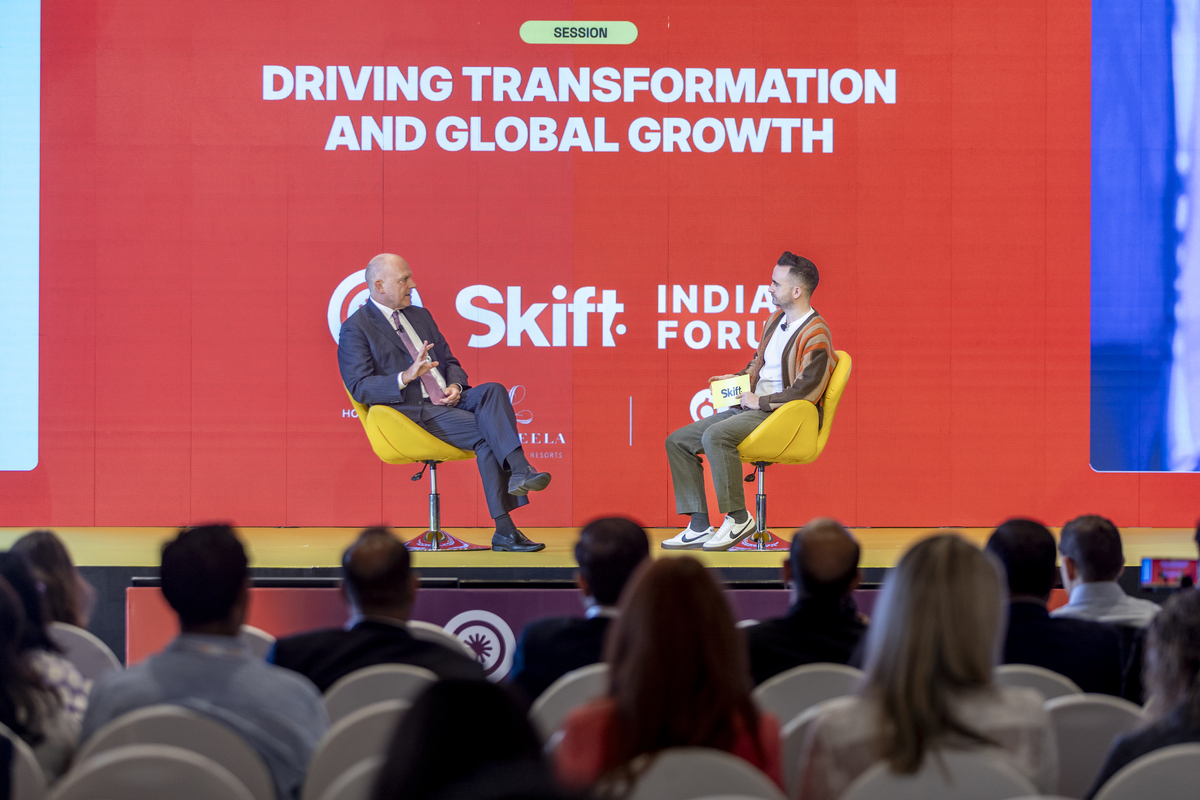
These are the structural questions leaders are bringing into the Skift India Intelligence Summit 2026 in New Delhi.
The Indian Travel Paradox
Outbound is on Fire
Indian travelers are not just traveling more; they are trading up, from premium economy cabins to curated international itineraries. Japan, Central Asia, and niche European destinations are dinner table conversations. Indian travelers are not just looking for deals anymore. They are upgrading cabins, chasing curated experiences, and benchmarking globally.
Outbound travel has already surpassed pre-pandemic levels, while inbound recovery still lags. That alone should trigger strategic discomfort.
Domestic is Relentless
Tier 2 and Tier 3 cities are flying like never before. Religious circuits are booming. Concert tourism is real. Hotel ADRs in peak season are bold and unapologetic. Airlines are adding capacity and still flying full.
And yet yields are volatile. Airport congestion is real. Infrastructure quality varies wildly by state. Scale exists, coordination does not.
Inbound is… Complicated
India’s inbound tourism recovery still trails major Asian competitors. Connectivity remains fragmented outside metros. Visa improvements have helped, but conversion remains inconsistent.
For a country with unmatched cultural depth, inbound performance feels under-leveraged.
That tension is the paradox.
Where the Profit Pools Will Actually Sit
India is exporting travelers at scale while scaling domestic aviation at home. Yet it has not fully captured its inbound opportunity, at a time when global travelers are actively diversifying beyond Europe and China.
Southeast Asia has executed with discipline, and the Middle East has engineered seamless hub experiences. India has the raw product, culture, nature, and heritage. But the product alone does not win.
Global platforms are doubling down on India as distribution consolidates, squeezing regional OTAs on margin while branded hotel chains push harder toward direct customer ownership. Loyalty is shifting beyond points, even as AI reshapes how trips are discovered and booked.
Capital continues to flow into India’s hospitality sector, drawn by strong demand, but clarity on long-term returns is still uneven. Aviation expansion is ambitious, yield discipline inconsistent, and state tourism strategies vary widely in execution.
So the real questions are not about passenger growth.
They are about control:
- Who owns the customer relationship in India’s travel ecosystem?
- Will inbound become a serious foreign exchange engine or remain an afterthought?
- Are airlines, hotels, and platforms aligned on long-term yield or still chasing quarterly optics?
- Where will sustainable margin actually live?
Why This Matters Now
If you are a senior leader in travel, this is your operating environment shifting.
These are exactly the issues travel leaders will tackle at the Skift India Intelligence Summit on March 26 in New Delhi.
Confirmed Leaders in the Room Include:
- Raj Rishi Singh, Chief Marketing Officer and Chief Business Officer – Corporate, Flights and GCC, MakeMyTrip
- Dipak Deva, Managing Director and CEO, Travel Corporation India Ltd.
- Mugdha Sinha, Managing Director, India Tourism Development Corporation (ITDC)
- Neelendra Singh, Managing Director & CEO, Lemon Tree Hotels
- Kapil Chopra, Founder and CEO, Postcard Hotel
- Ranju Alex, CEO for South Asia, Accor
This is an Apply to Attend gathering curated for decision makers allocating capital, setting strategy, and shaping India’s travel ecosystem. Please note that completion of this form does not guarantee a spot at this event.
Are you in the room when that conversation happens?