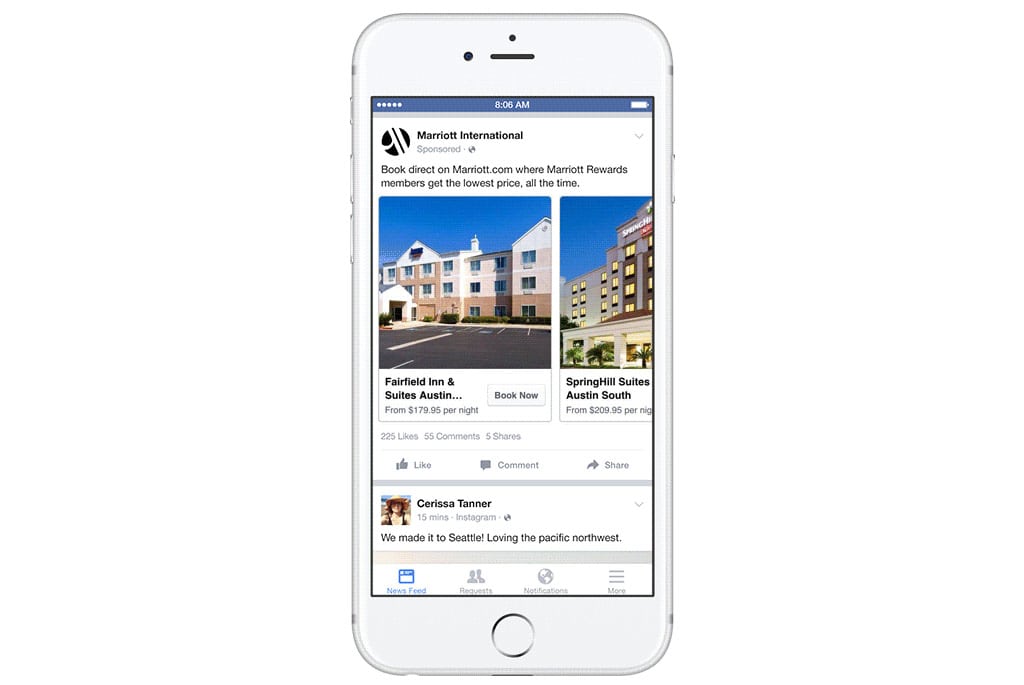
Facebook has quickly gone from the experimental phase for many travel companies to a growing part of the advertising budget with its own line item. We see the importance of the platform for the travel industry continuing to grow.
Facebook’s ability to retarget consumers combined with the ads being visual, aspirational, cost-effective, and largely in-app for Facebook’s massive and highly-engaged user base will make the platform an increasingly important tool for the travel industry.
Even if TripAdvisor can straighten out its Instant Booking feature, it still faces the daunting task of changing consumer perceptions in the face of Expedia, Booking.com and others, which are saturating digital media and broadcasting.
Every travel company wants to be known as innovative. But creating the right culture for innovation can be challenging. That's why travel incubators seem like such a great strategy: access to outside partners, ideas and talent with minimal risk.
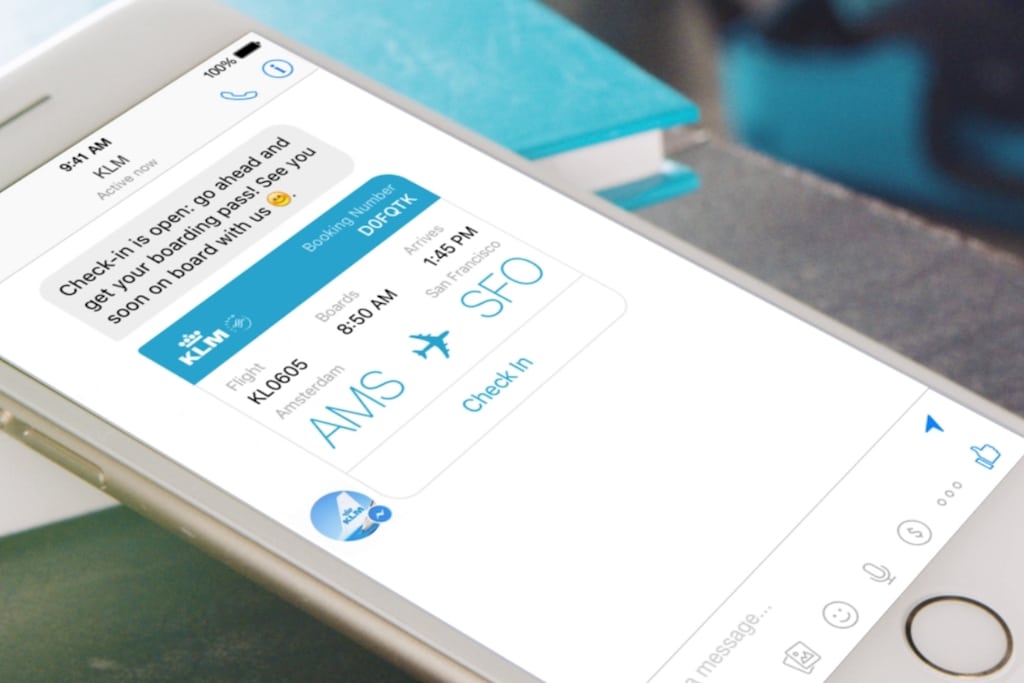
Social media is rapidly becoming one of the travel industry’s most important channels for customer service, but there's no one-size-fits-all approach. From automated chat bots to digital concierge services, find out what's working for top travel brands.
Does National Geographic's push into original scripted TV signal that the industry is shifting away from bland travel reality shows and snooze-worthy programming about cruises and Las Vegas? We sure hope so.
Overtourism is a growing problem, so it's heartening to see Booking.com taking on the problem of sustainability in an innovative way. That said, it's still too early to tell if this is a genuine commitment to sustainability, or just a "feel-good" move to create PR headlines.
Facebook will be cracking down on how many ads it includes in newsfeeds, which could impact some brands' ad performance. Instagram, however, is a promising bet to make if brands are thinking longer term about ads, who they'll reach and how they'll be seen.