
The Great Rebalancing: Asia’s Advantage and Why Travel Brands Need to Catch Up




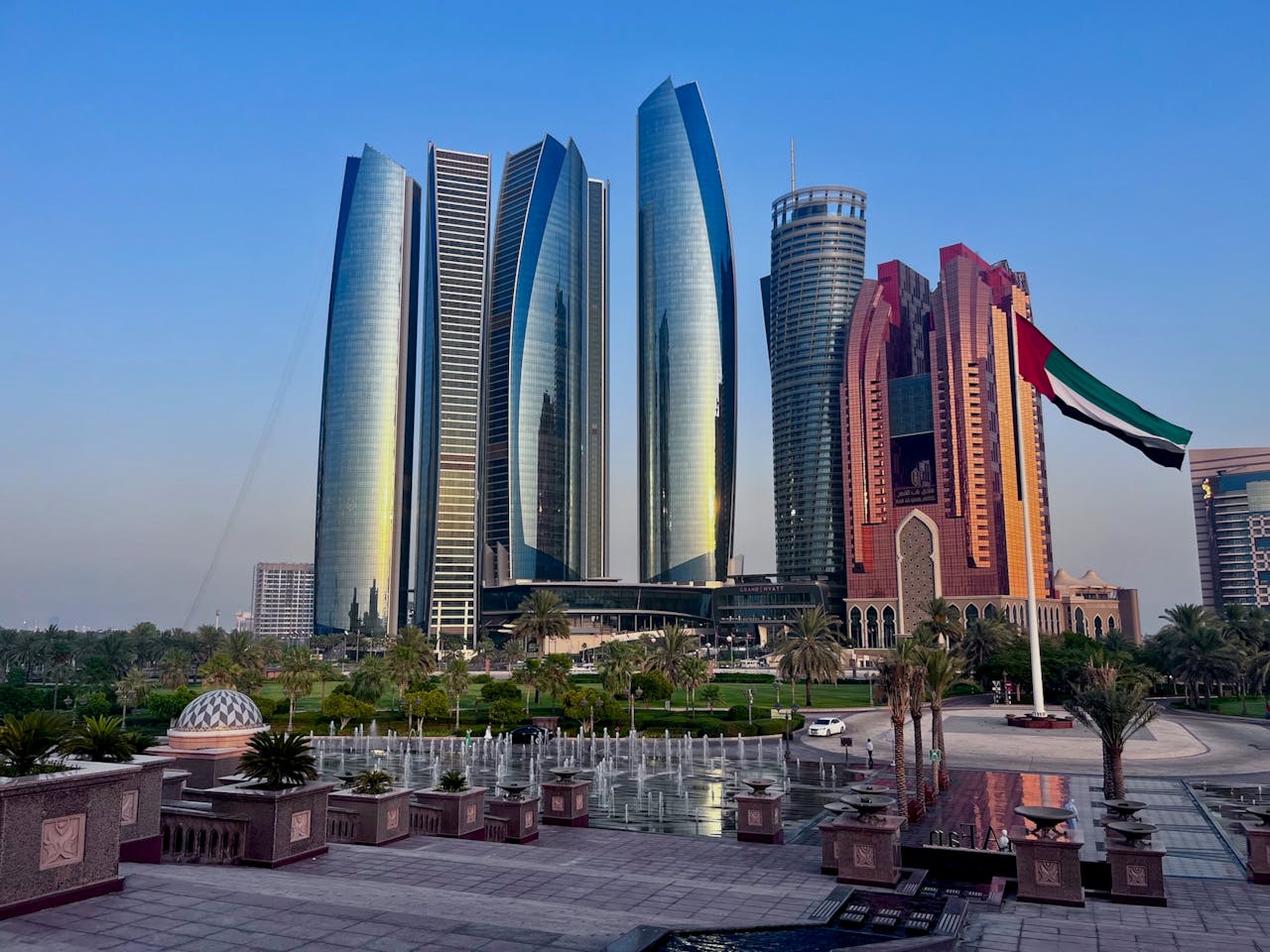
Photo Credit: The Abu Dhabi skyline. Pexels / FRANCK LEMOZY
Skift Take
The Iran war disrupted travel across key corridors, but it also exposed a larger shift already underway. Asia increasingly brings together the demand growth, traveler demographics, value, and digital behavior shaping the industry’s next decade. Many strategies are still built around the demand patterns of the previous one.


Call centers collapsed. Guests were stranded in transit. Flights were rerouted, canceled, and repriced at 10 and 20 times their original fare. Fuel costs spiked 60%. A third of all Europe-Asia passenger traffic, around 125 million annual travelers, normally flowing through Gulf hubs, was disrupted.
The scale of disruption constitutes an acute crisis. In the coming months, the conflict’s reverberating effects on global travel will become a defining story. Recovery will be less visible but equally important. Data collected months before the first strike already pointed to who will drive the next phase of global travel growth and where demand was heading.
Increased Consideration for Travel to Asia Is Not New
Skift’s proprietary research across 50,000 travelers in 35 markets asked a simple question: where do you want to go in the next two years?
The results pointed to a consistent upward trend. The wider Asian market, including the Middle East, was already gaining share of global demand. Dubai registered nearly 20% global consideration. Japan stood at 18%. Thailand reached 10%, while Singapore and South Korea each recorded 8% each.
The United States also stood at 18%, but the trajectory was very different. After a decade as the world’s aspirational destination, it was already losing momentum.
The Skift Travel Health Index reinforces the same pattern. As of February 2026, North America stood at 94, below the global baseline of 100 and the only major region in the red. Europe was flat at 100. The Middle East and Africa reached 104. Asia Pacific stood at 102.
It is the first sustained period in modern travel in which North America has underperformed every other major region. Hotel RevPAR across Asia Pacific, excluding China, was growing at double digits. India’s hotel index stood at 120. Japan’s at 117. Singapore’s at 117.
Growth across Asia is real, but uneven. India, Japan, and Australia are leading. Parts of Southeast Asia are seeing momentum tested by energy costs and infrastructure constraints.
The conventional narrative has not caught up. Many global travel strategies still treat Asia as a market of future potential, a secondary priority after North America and Western Europe. The language itself reveals the assumption: “emerging” markets, “developing” demand, as though Asia’s vast travel population were waiting for permission to reshape the industry. The shift in demand was already underway.
What makes this shift durable rather than cyclical comes down to four compounding forces:
Demographics: Those still optimizing for the 45-plus Western leisure traveler are optimizing for an ever-shrinking pool.
59% of India’s outbound travelers are under 35. Indonesia stands at 53%. China at 38%. The United States at 29%.
India and Indonesia’s travel markets are being shaped by a generation that books on mobile, discovers destinations through social platforms, and influences peers in real time. Mature Western markets remain valuable, but many are growing more slowly, shaped by older cohorts with more established travel habits.
The commercial implication is direct. Destinations and hotel groups that build their marketing, distribution, and product strategy around travelers under 35 today are positioning for the fastest-growing source markets of the next decade.
Price: Asia is the value destination at a moment when value matters more than it has in a decade.
Consumer prices are flat or falling across much of APAC. China and Thailand are in disinflationary territory. In Skift Advisory’s research, cost ranks as a top-three barrier to travel at 24%.
As household budgets tighten across many Western markets, Asia’s competitive advantage widens. Travelers can access high-quality hospitality, food, and experiences at price points that compare favourably with major long-haul alternatives.
Value is not only about low cost. It is about what travelers feel they receive for what they spend.
Digital Infrastructure: The distribution layer across this region is digitally native and already operating at scale.
73% of Indonesian travelers book through OTAs. India stands at 57%.
The infrastructure is already built and widely used. Across much of the region, mobile-first behavior, integrated payments, super apps, and OTA ecosystems have shaped how travelers discover, book, and navigate trips.
The strategic question for global hotel groups and destination marketers is whether their products are optimized for these behaviors, or whether they remain overly dependent on booking journeys designed for different consumer habits.
Experience Premium: If a guest cannot create a piece of content worth posting from a property or destination, the premium disappears.
Across Skift Advisory’s research, travelers are willing to pay a 40% premium for unique local experience access over standard accommodation quality, provided that experience feels distinctive and shareable.
Travelers are taking fewer trips at higher value, with greater emphasis on personalization, cultural depth, concerts, festivals, and food. Asia’s cultural inventory is deep enough to sustain this demand across dozens of markets and hundreds of cities.
Destinations built around a single core proposition, whether beach, retail, or sightseeing, face growing pressure to add depth, originality, and repeatable reasons to return.
Safety as a Core Destination Choice Filter
One structural advantage gets less attention than it deserves. Safety has become one of the primary filters in destination choice, often shaping consideration before price, distance, or visa complexity enter the decision.
The Iran war reinforced how quickly confidence can be disrupted. 70% of Southeast Asian operators whose clients transit through the Middle East reported direct disruption. Only 5% said business was proceeding as usual.
In Skift Advisory’s research, personal safety concerns rank as the number one barrier to travel at 29%. Political instability ranks second at 28%.
These concerns intensify sharply with age. Among travelers aged 55 to 64, often the cohort with the highest spend per trip, concern about political instability rises to 38%. Among those aged 18 to 24, it stands at 21%. Higher-value travelers are often the most sensitive to perceived risk.
Asia’s position here is quietly powerful. APAC travelers are less deterred by safety fears than many Western travelers. Chinese travelers cite safety concerns at 26%, compared with 33% among U.S. and UK travelers.
Intra-Asian demand flows, one of the fastest-growing segments of global travel, show greater resilience to geopolitical disruption, even when instability occurs in a neighboring region.
The Gulf as Asia’s High-Value Demand Engine
Understanding travel corridors to Asia requires understanding the Gulf.
In periods of crisis, the Middle East is often viewed primarily through the lens of disruption. That framing misses its deeper structural role in global travel.
Each time the region has faced a severe crisis, predictions of permanent damage have followed. Each time, the Gulf hubs have recovered strongly. The reason is simple: geography is durable. Dubai, Doha, and Abu Dhabi sit at the intersection of three continents and every relevant time zone. No conflict changes the structural logic of why these hubs exist.
The current disruption is real and severe. Yet the Gulf’s role as connective tissue between Asia, Africa, and Europe remains intact. When routes fully reopen, traffic flows are likely to recover. For a significant share of east-west travel, there is still no more efficient alternative routing.
The commercial case is equally important. Gulf travelers show the highest willingness to spend on premium experiences of any source market in Skift Advisory’s research. 26% of Indian travelers and 24% of Indonesians are considering Dubai for their next trip. When UAE travelers book destinations such as Thailand, the Maldives, or Japan, they typically book at the top end of the market across hotels, dining, and experiences.
For many APAC destinations, the Gulf is more than a transit corridor. It is their high-value demand engine. Protecting and deepening that source market relationship through the current disruption is a commercial priority. The travelers on the other side of it are among the highest-value customers in the pipeline.
The destinations that maintain visibility, trade relationships, and market presence in Gulf markets during the disruption are likely to capture disproportionate recovery spend when demand normalizes. Those that pull back may find rebuilding that position far more costly later.
What the Stress Test Revealed
64% of operators expect near-term demand to redirect toward intra-Asia destinations. That is rational short-term behavior. Travelers reroute around friction and choose what feels accessible. As conditions stabilize, many long-haul flows are likely to resume.
The more important change is already visible in the underlying demand picture.
For years, Asia was positioned as the future opportunity, the long-haul aspiration, the next trip someday. North America and Europe, meanwhile, captured a disproportionate share of premium marketing spend and investment attention.
The data tells a different story. Across approximately 58,000 travelers in 31 markets, spanning five Skift Advisory studies conducted between 2023 and 2025, Asia and the Gulf increasingly combine the forces shaping modern travel demand: younger travelers, stronger demographics, advanced digital behavior, attractive value, resilient regional flows, and high-quality experiences people actively seek out.
Recent disruption has brought these advantages into sharper focus, accelerating decisions that were already moving in this direction. For airlines, hotel groups, platforms, and destinations across the region, the opportunity is significant. Demand is growing. Distribution is evolving.
Consumer value perception is favorable. Traveler behavior is shifting toward the strengths many markets in the region already possess.
The center of gravity may already have moved. Many strategies have not. What gets built now will determine who captures that demand, and who watches it flow elsewhere.
This analysis draws on Skift’s Intrepid Traveler Segmentation proprietary quantitative market research surveying 50,000 travelers in 35 outbound travel markets, supplemented by the Skift Travel Health Index and ASEANTA/Pear Anderson industry survey data.
About Skift Advisory
Skift Advisory is a consultancy that harnesses the power of brands, strategy, research, communications, and technology to create a unique competitive position and a blueprint for the future for leaders that span the travel, tourism and entertainment ecosystem.
We work with leaders of travel and tourism destination management organizations, operators, hoteliers, airlines, and investors to define their unique, sustainable competitive advantage and to develop, implement, and assess enduring tourism strategy. We are wholly-owned by Skift, the world’s most influential travel and tourism industry thought leader.
Michelle Gounden is Director, Insights at Skift Advisory. Aleix Rodriguez Brunsoms is Director, Strategy at Skift Advisory. Rohan Agarwal is Director, Strategy at Skift Advisory. Oliver Martin is Senior Director at Skift Advisory.