Plastics in Airline Catering Raise Questions About Carbon Emissions
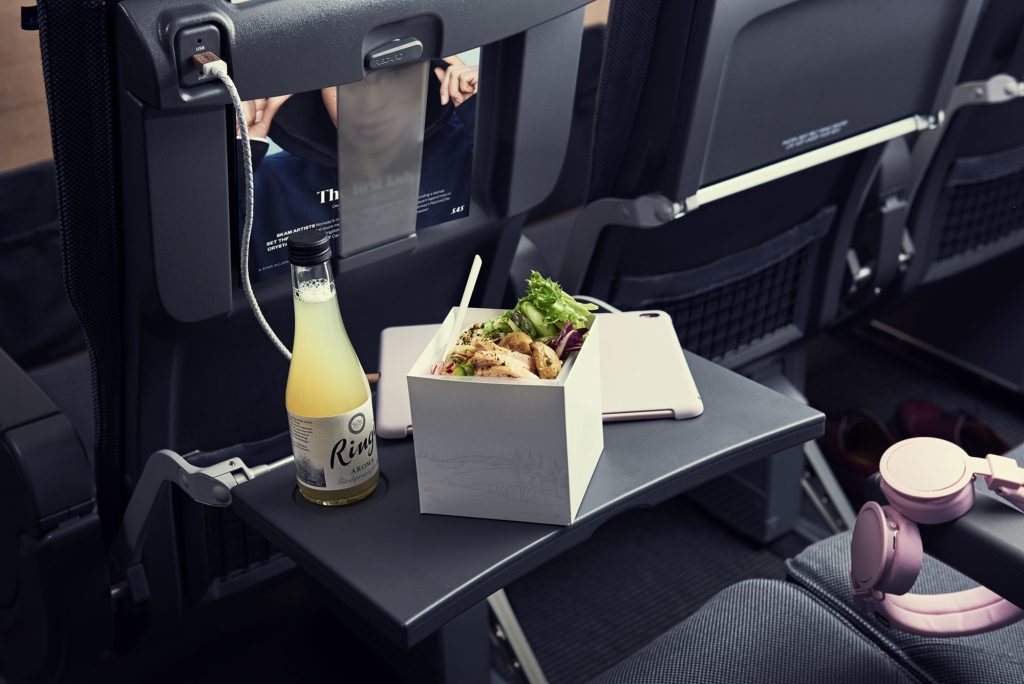
Photo Credit: Scandinavian Airlines serves meals in compostable cardboard material. Scandinavian Airlines
Skift Take
Airlines have a love-hate relationship with plastics, especially when it comes to food and beverage. Plastics pose a serious environmental threat, but at the same time they're lightweight and thereby help reduce carbon emissions. Can carriers tackle both of these problems at once?
Plastics play a huge role on airplanes, especially in catering, but it wasn’t always this way. Going back to the so-called golden age of air travel in the 1950s and 60s, the experience of flying was very different: fine china, cocktail glasses, and real cutlery.
Naturally, those flights were expensive for the time, and few people could afford to fly. Today, democratization has arrived and anyone with even 60 dollars can fly somewhere on a low-cost carrier. With exceptions for first and business class, we’ve swapped the porcelain plates for plastic cups, plastic straws, plastic coffee stirrers, and plastic-wrapped cookies.
These items are awfully convenient. Plastic is lightweight, so it’s quick and easy for cabin crew to dispose. There’s also no concern about sanitation in this tight-knit space — everything is single-use or individually wrapped. Plus, the lightweight factor means an increase in fuel efficiency, which helps lower carbon emissions and keep fares down.