
A Rare Defense of ‘Eurobusiness’ Class
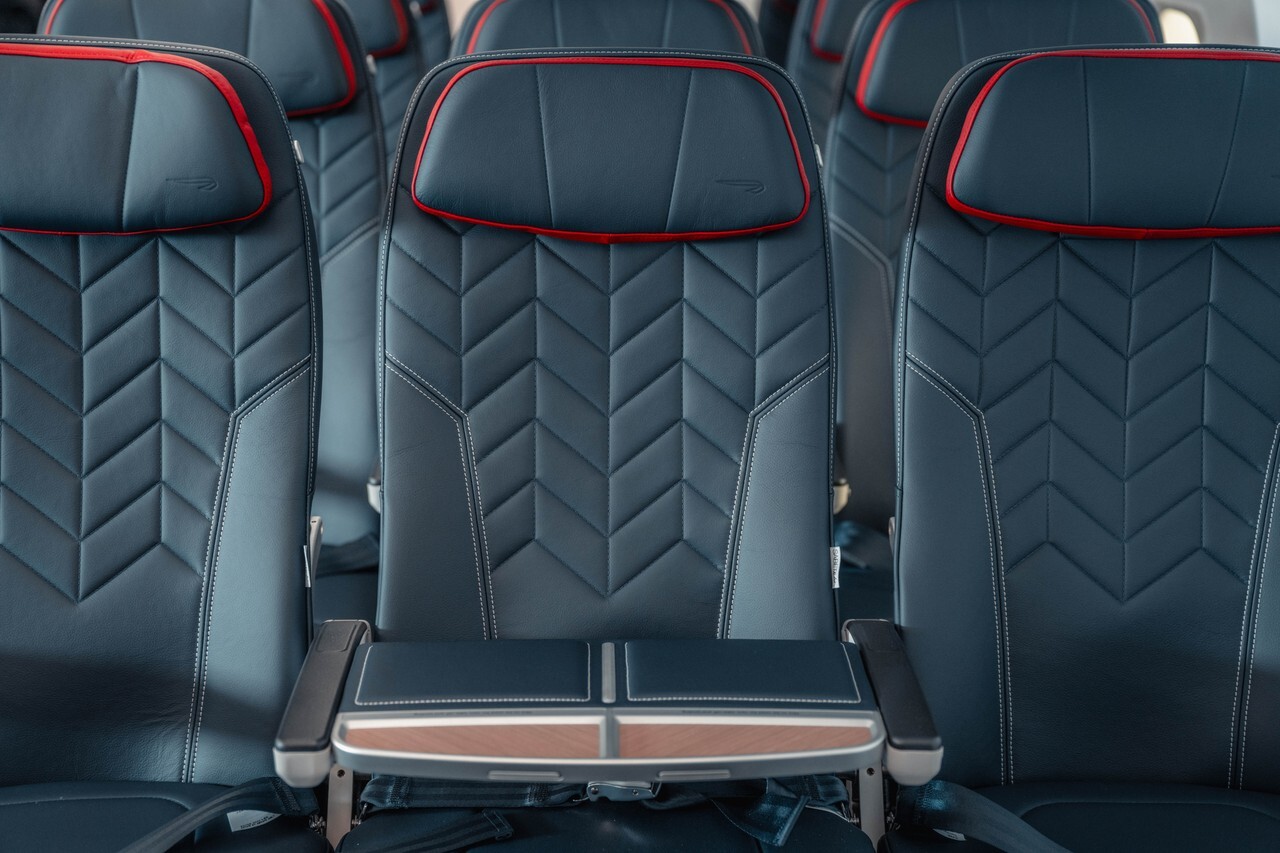
Photo Credit: Club Europe seating onboard a British Airways Airbus A320. British Airways
Skift Take
Viewed from the lemonade-not-lemons perspective, Europe's short-haul business class does at least bring flexible capacity to the (tray) table.

Short-haul business class across continental Europe is remarkably consistent. The product – commonly referred to as Eurobusiness – is built around standard economy seating, with the adjacent seat left empty under a “no neighbor” or blocked-middle-seat policy.
Outside Europe, similar configurations exist. Air New Zealand sells a version on trans-Tasman routes. U.S. carriers experiment with extra-space options like Frontier’s UpFront Plus. Low-cost airlines in Asia offer paid “space seat” concepts.
What makes Europe different is that its network carriers have made this model the norm – and have unapologetically branded and priced it as business class.
Far from retreating from Eurobusiness, European airlines are doubling down on it.
Following Air France-KLM’s acquisition of SAS, the Scandinavian carrier has moved back to a traditional Eurobusiness product, replacing its SAS