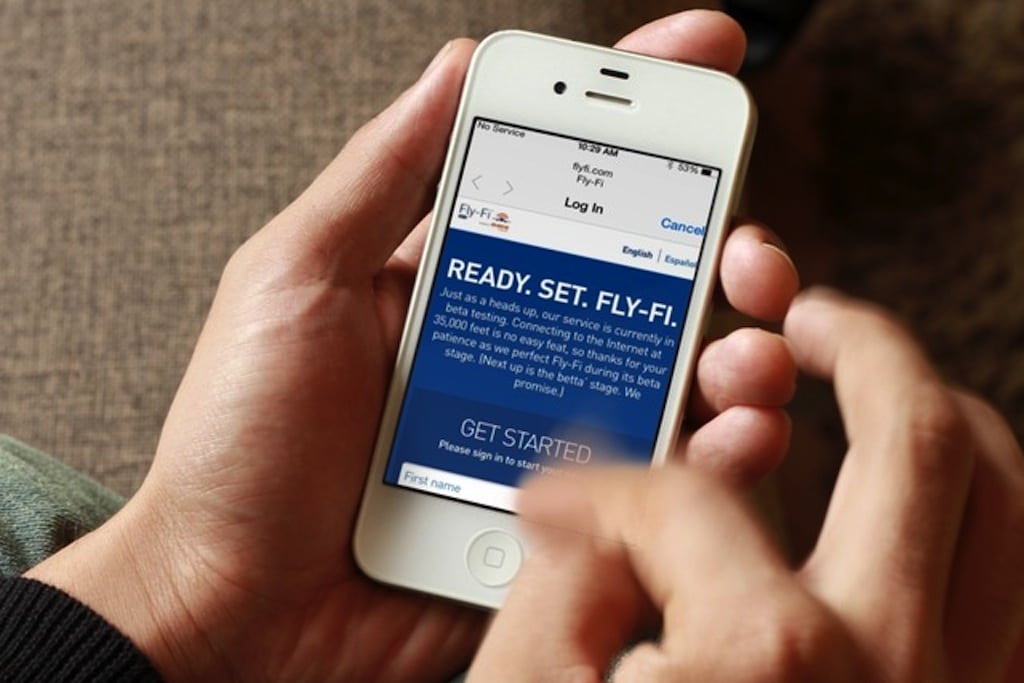

These are the opinions of one executive at one of several in-flight Wi-Fi providers that would gain great profits from expanded in-flight connectivity. We can't take his goals as gospel, but it's a vision that all flyers would like to see actualize.
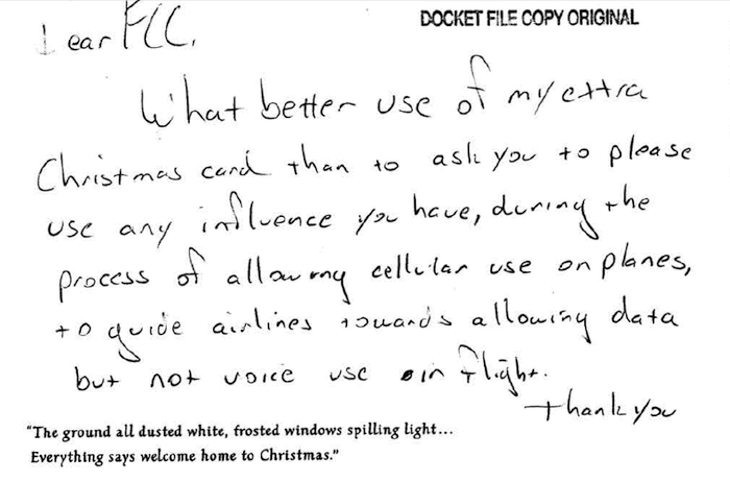
Making in-flight Wi-Fi free for good would change the competitive landscape forcing other airlines to consider free connections for the future. JetBlue might be late to the game, but it's making up for it in a big way.
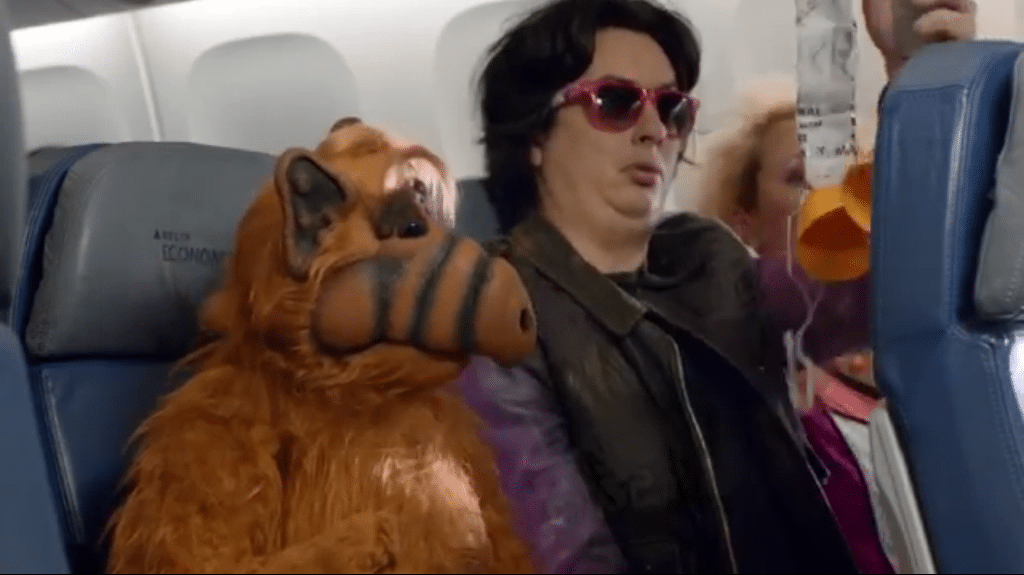
Kudos to the house panel for the humor and savvy in leveraging BuzzFeed, but the chairman's opposition to in-flight voice calls is based on pandering and misinformation about a service that has worked without incident on international airlines for years.
Let's see: Now we have a powerful Congressman telling passengers to keep their personal lives to themselves as one of his arguments against in-flight voice calls. Passengers on European, Asian, Middle Eastern and Latin American Airlines have been making in-flight voice calls for years, and without major flareups.
Expedia tries to sum its survey with a sunny figure that says 84 percent of passengers believe fellow flyers are considerate, but the excitement around increased in-flight device use suggests most people prefer to fly with as little human contact as necessary.
KLM isn't afraid to experiment, even if some ideas (social seating?) sound like real duds. This, on the other hand, is a welcome treat and a great reason why anyone flying KLM should tell all their friends what airline they will be on.
The controversy about in-flight voice calls on U.S. airlines may be overstated. Foreign airlines have been allowing it for years, and there hasn't been a huge problem. Most passengers prefer texting and email anyway.