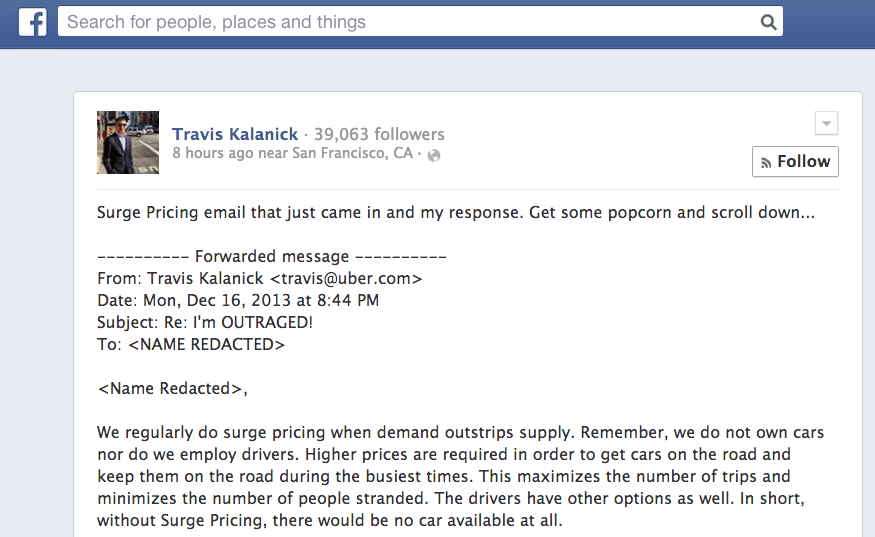
As we noted yesterday, if Uber is going to be the on-demand solution to all our transportation needs, it will need to take a few lessons from Amazon on how to do customer service.
Jeffery Boyd doesn't want to meddle in Priceline's business on a day to day basis, which may provide angst to some investors. Still, incoming CEO Darren Huston has capably led Priceline's prized asset, Booking.com, over the last two years, so he's got the pedigree in what promises to be a fascinating new era in online travel.
The taxi industry is going to have to get used to it. There is more competition now in the form of Lyft, Uber, and services such as Zipcar. Although individual startups may come and go, the ride-sharing concept is here to stay.
Lists like this are always about buzz rather than reality, so watchers will have to wait until these six reach their forties to see if they can turn their young-ish companies into established players.
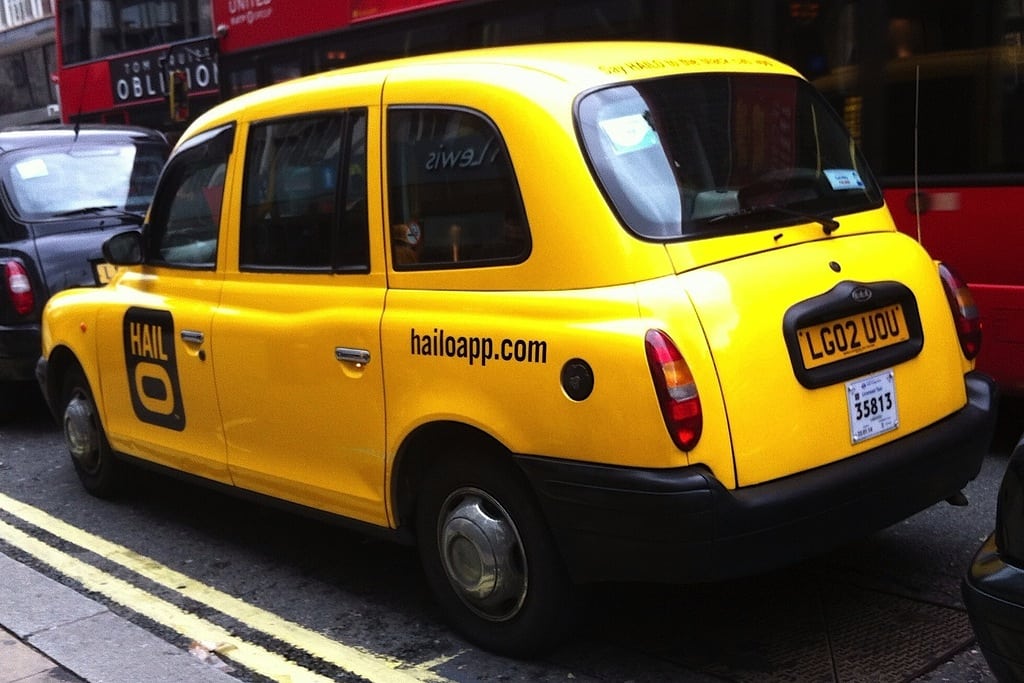
Plenty has been written about the e-hail companies' battles with regulators and new economy versus old. But their biggest challenge will be running what's basically a Ticketmaster for rides when the barrier for entry -- and costs, too -- are lower for existing players.
UberX’s greatest competitors might not be peer-to-peer ridesharing startups; they’re the taxi e-hailing apps that are gaining legitimacy and providing users a cheaper, faster way to access a transit option they already know and trust.
The fate of the pilot program will be decided on by Monday, but we are certain that this will not be the end of legislative confusion, no matter what that “final” decision is.
Big stakes game of hide-and-seek in the local taxi business in New York City, with huge entrenched players on one side with some legit demands, pushing against brash upstarts with dreams of disrupting.